
High Cortisol: Signs, Symptoms and Effects on Health
Introduction
Most people associate stress with a busy mind. Deadlines, family responsibilities, financial concerns, and the constant hum of modern life can make it feel like there is no escape from pressure. But stress does not just affect how we feel. It affects how our body functions on a biological level.
One of the main players in this response is cortisol, often referred to as the “stress hormone.” Cortisol is vital for survival. It regulates energy, supports metabolism, influences immune function, and helps your body respond to challenges throughout the day. Without it, normal daily function would be impossible.
The problem is not cortisol itself. The problem begins when the body stays in “alert mode” far longer than intended.
Understanding Short Term vs. Chronic Stress
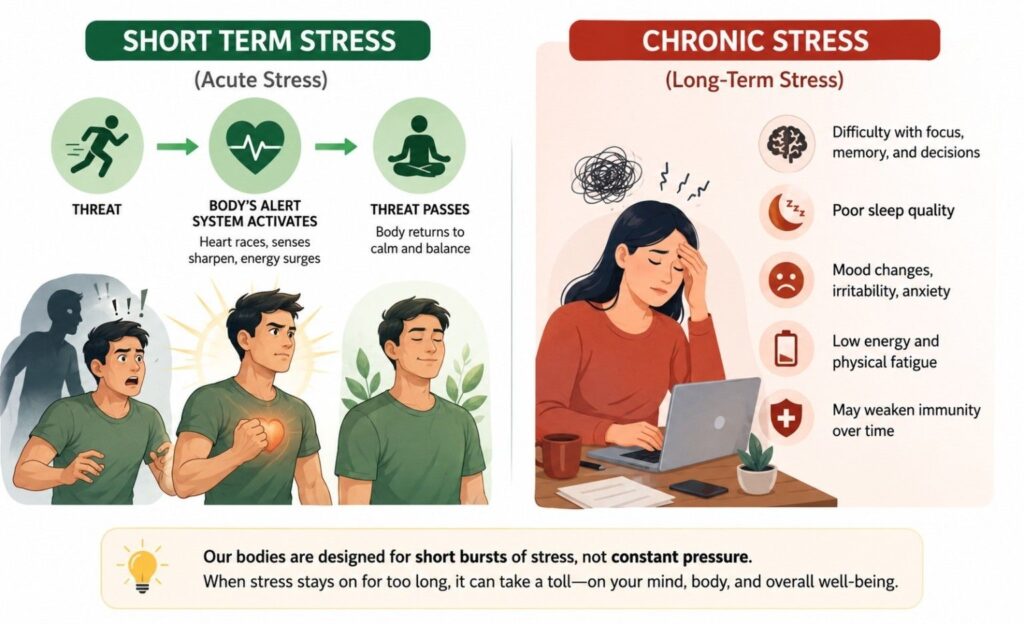
Our bodies are designed for short term stress responses. Imagine encountering a sudden threat. Your heart races, senses sharpen, and energy surges. Once the threat passes, your body naturally returns to a calmer state.
Modern life often keeps the stress switch on indefinitely. Continuous work pressure, insufficient sleep, chronic health concerns, and emotional strain can keep cortisol elevated day after day. Over time, this can subtly affect sleep, mood, focus, and energy levels.
Signs Your Cortisol May Be High
High cortisol levels are not always obvious at first. Watch for:
• Persistent fatigue despite adequate rest
• Brain fog or difficulty concentrating
• Increased irritability or anxiety
• Cravings for sugary or processed foods
• Abdominal weight gain
• Difficulty falling or staying asleep
• Feeling “wired but tired”
• Reduced motivation
These symptoms are often mistaken for a busy lifestyle or aging, but prolonged stress may play a larger role.
A healthy lifestyle, consistent routines, and mindfulness can help your body leave survival mode and thrive.Cortisol and Sleep:
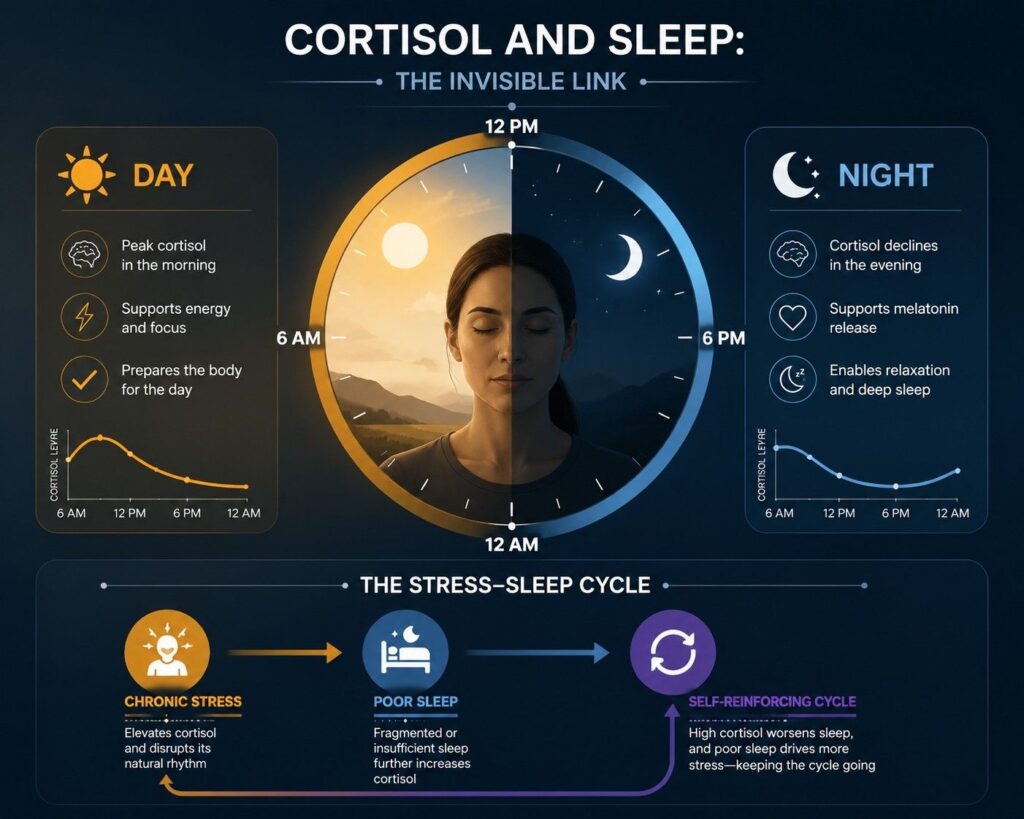
The Invisible Link
Cortisol follows a natural daily rhythm: higher in the morning to wake you up and declining toward night to allow rest. Chronic stress can disrupt this pattern. Some people feel exhausted by day but alert at night, while others struggle to wake refreshed. Poor sleep can worsen stress, creating a self reinforcing cycle.
The Health Implications
Chronic cortisol elevation is linked to multiple systems:
• Metabolism: May affect appetite, weight, and energy regulation
• Immune function: Persistent stress can weaken the body’s defense mechanisms
• Mood and cognition: Anxiety, irritability, and concentration difficulties
• Cardiovascular system: Long term stress can influence blood pressure and heart health
Understanding these effects highlights why managing stress is essential for overall health.
Supporting a Healthy Cortisol Rhythm
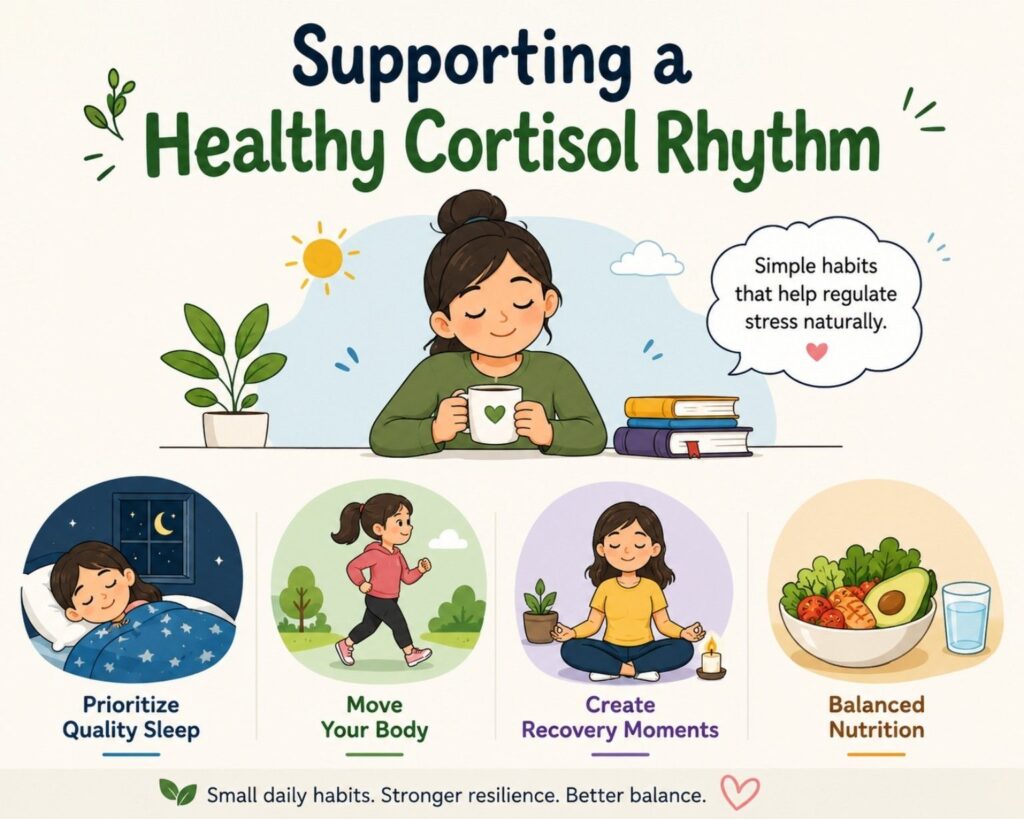
No single supplement or quick fix exists, but research suggests that certain habits can help regulate stress.
Prioritize Quality Sleep
Maintain consistent sleep schedules and a calm bedtime routine.
Move Your Body
Regular physical activity supports stress processing and mental resilience. Even short daily walks help.
Create Recovery Moments
Schedule downtime through reading, meditation, nature walks, deep breathing, or quiet reflection.
Balanced Nutrition
Whole foods, proper protein, reduced caffeine, and minimal processed sugar support your body’s resilience.
Final Thoughts
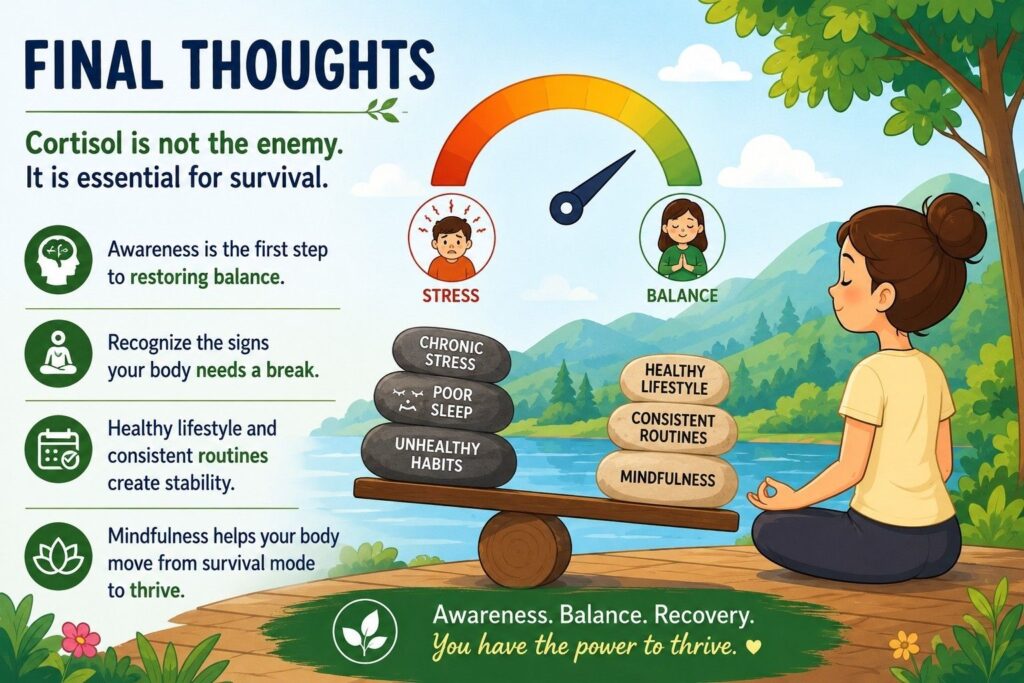
Cortisol is not the enemy. It is essential for survival. The challenge arises when your body remains in a constant state of alert, even when there is no immediate threat.
The key is awareness. By understanding how chronic stress affects your body, you can take practical steps to restore balance. Recovery begins not with a complicated plan or supplement, but by recognizing when your body is signaling that it needs a break.