
The Invisible World Inside Your Gut.
Most people think about the gut only when something feels wrong.
Digestion becomes uncomfortable. Bloating appears after a meal. The stomach feels unsettled. At that point, attention shifts toward the digestive system.
The interesting thing is that the gut does not suddenly become important when symptoms appear.
It has been active the entire time.
In fact, one of the more fascinating developments in health research has been a growing appreciation for just how complex the gut really is. For many years, the digestive system was viewed primarily through the lens of digestion. Food entered the body, nutrients were absorbed, and waste was eliminated.
That explanation was not wrong.
It was simply incomplete.
Today, researchers often describe the gut in a different way. Rather than viewing it as a single organ performing a single task, many scientists see it as a living ecosystem.
More Than a Place Where Food Is Processed
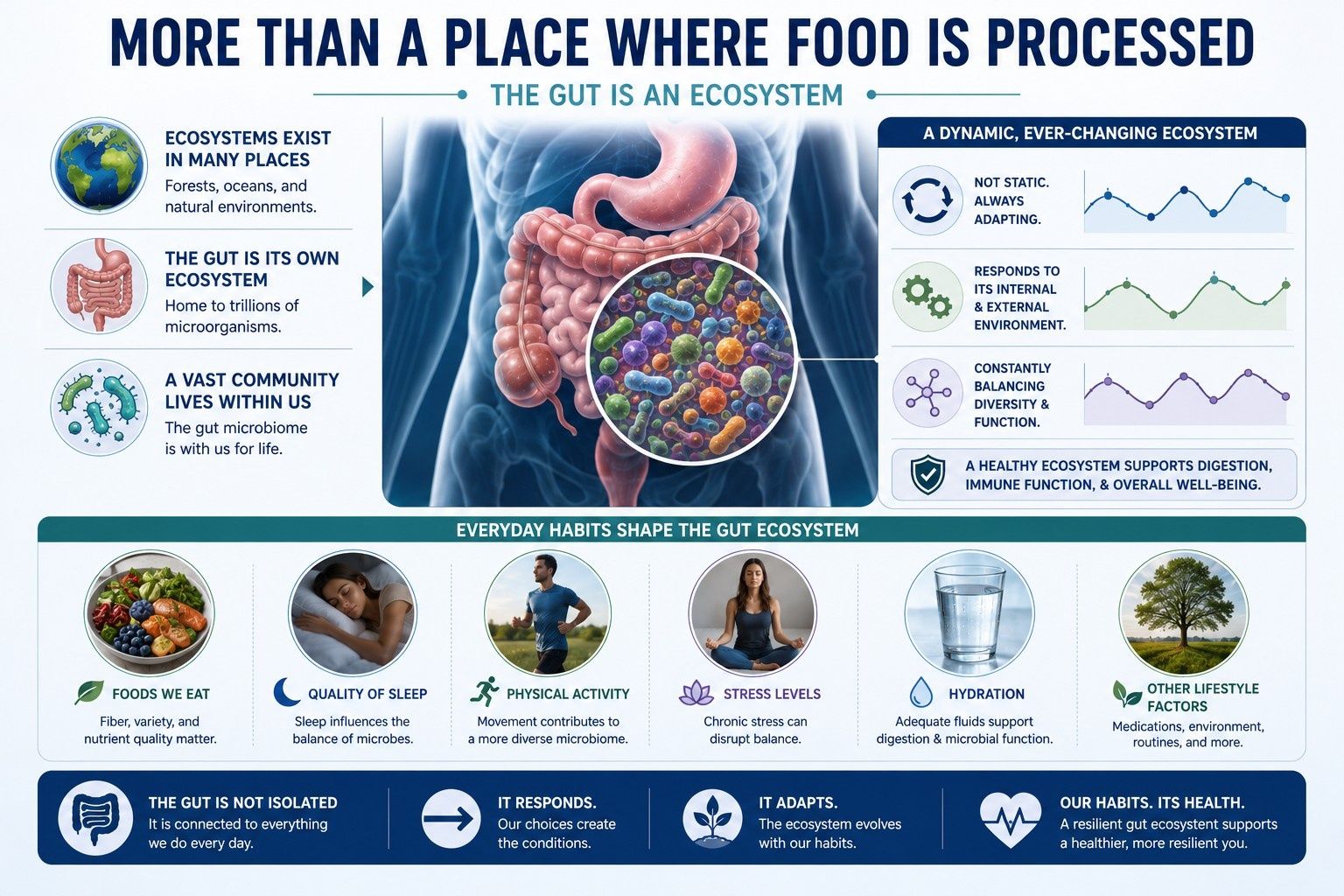
The word ecosystem is usually associated with forests, oceans, or natural environments.
Yet the same idea can be applied to the gut.
Within the digestive tract lives a vast community of microorganisms. These organisms exist alongside us throughout life and form what is commonly known as the gut microbiome.
What makes this ecosystem particularly interesting is that it is constantly changing.
Unlike a static structure, the gut responds to its environment. The foods we eat, the quality of our sleep, levels of physical activity, and many other aspects of daily life contribute to the conditions in which this ecosystem exists.
The gut is not isolated from everyday habits. It responds to them.
Why Patterns Matter More Than Single Events

People often search for a single food, supplement, or habit that will dramatically improve gut health.
The biology of the gut appears to be more complicated than that.
A single meal rarely determines the state of the gut. One healthy choice does not transform it overnight. Likewise, one less than ideal choice is unlikely to undo years of healthy habits.
The body tends to respond to patterns.
This idea appears repeatedly across different areas of health science. What happens consistently often matters more than what happens occasionally. The gut is no exception.
A Growing Area of Scientific Interest
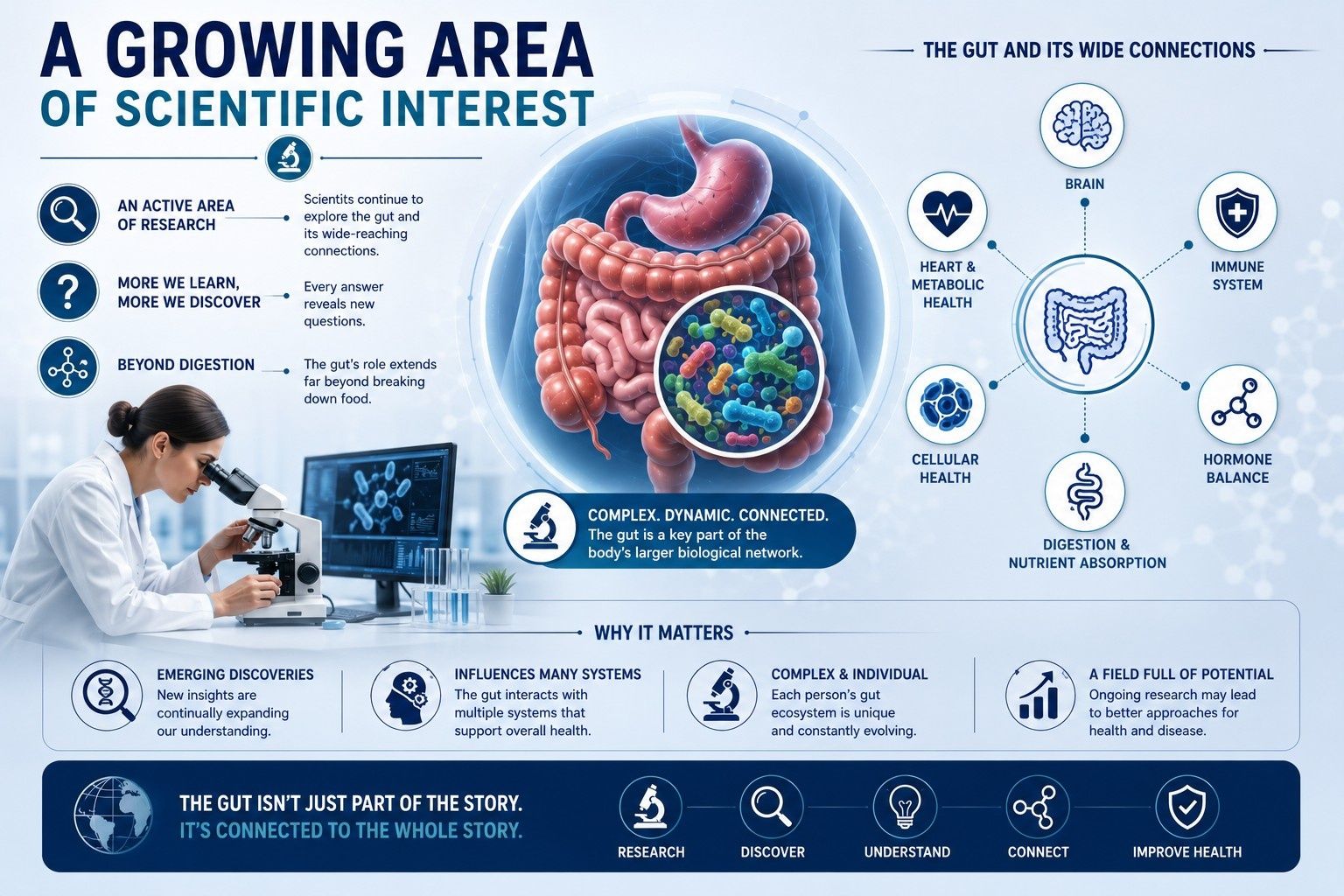
Researchers continue to study the relationship between the gut and various biological systems throughout the body.
What makes this field particularly interesting is not that every question has been answered. In many cases, the opposite is true.
The more scientists learn about the gut, the more its complexity becomes apparent.
This complexity is one reason the gut has become such an active area of research. It challenges the idea that digestion is the only story worth paying attention to. The digestive system may process food, but it also exists within a much broader biological network.
A Different Way to Think About Gut Health
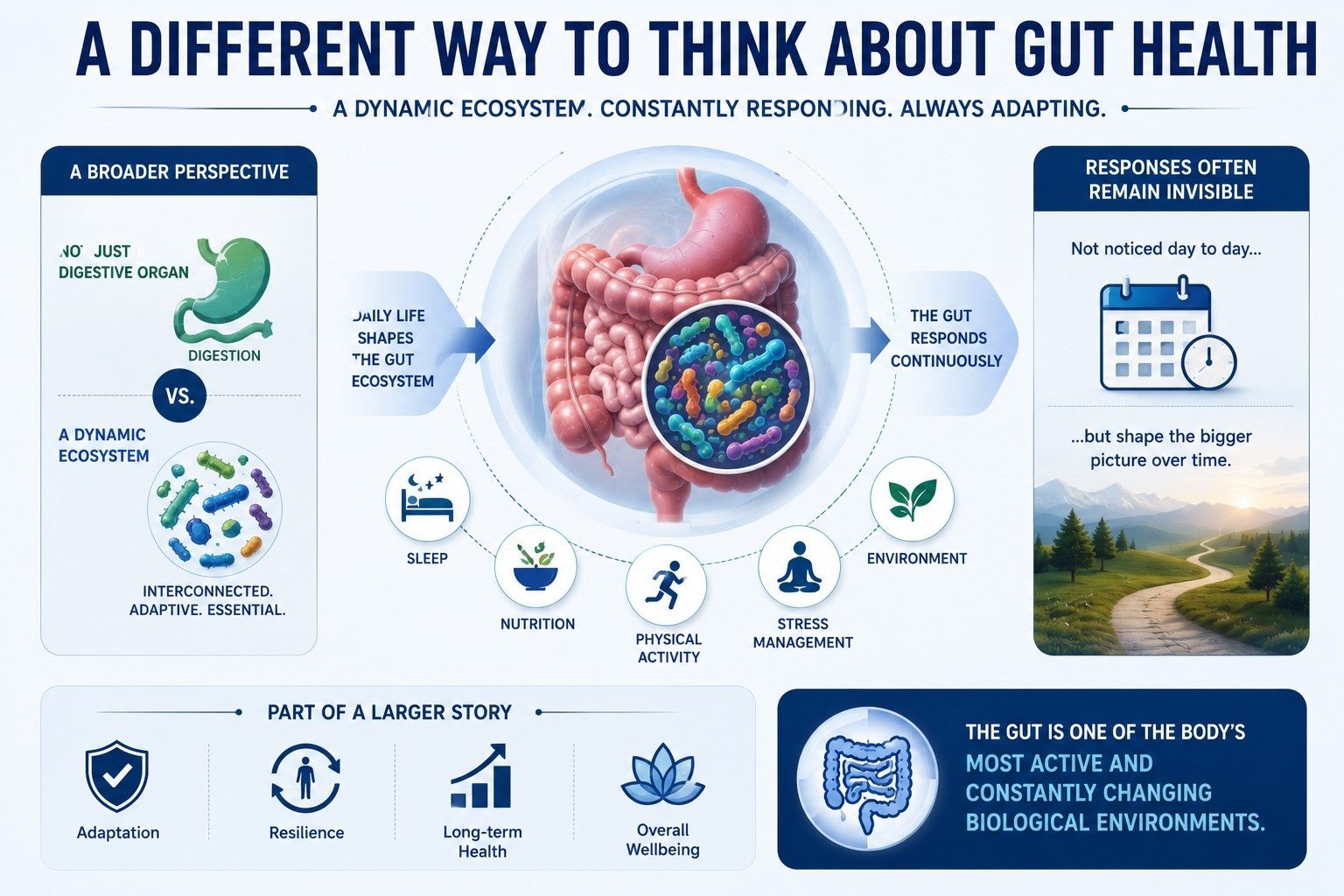 Perhaps the most useful shift is not learning a new fact about the gut.
Perhaps it is changing the way we think about it.
The gut is often discussed as though it were simply a digestive organ.
Modern research suggests a broader perspective.
It may be more accurate to view the gut as a dynamic ecosystem that is continuously responding to the environment created by daily life.
Many of those responses remain invisible.
We do not notice them from one day to the next.
Yet over time, the patterns that shape this ecosystem become part of a larger story about health, adaptation, and wellbeing.
The gut is not just a place where food is processed. It is one of the body’s most active and constantly changing biological environments.