
Before Symptoms Appear: The Body Has Already Begun Responding
Most people assume that a health problem begins when a symptom appears.
A headache develops. Sleep becomes restless. Energy levels seem lower than usual. Digestion feels different. These are the moments that attract attention because they are difficult to ignore.
Yet from a biological perspective, symptoms are often not the beginning of the story.
They are simply the point at which the story becomes visible.
This distinction is easy to overlook because human beings naturally pay attention to what they can feel. We notice discomfort. We notice fatigue. We notice changes that interfere with daily life.
What we do not notice are the countless adjustments taking place within the body long before those changes reach our awareness.
Health Is Not a Switch
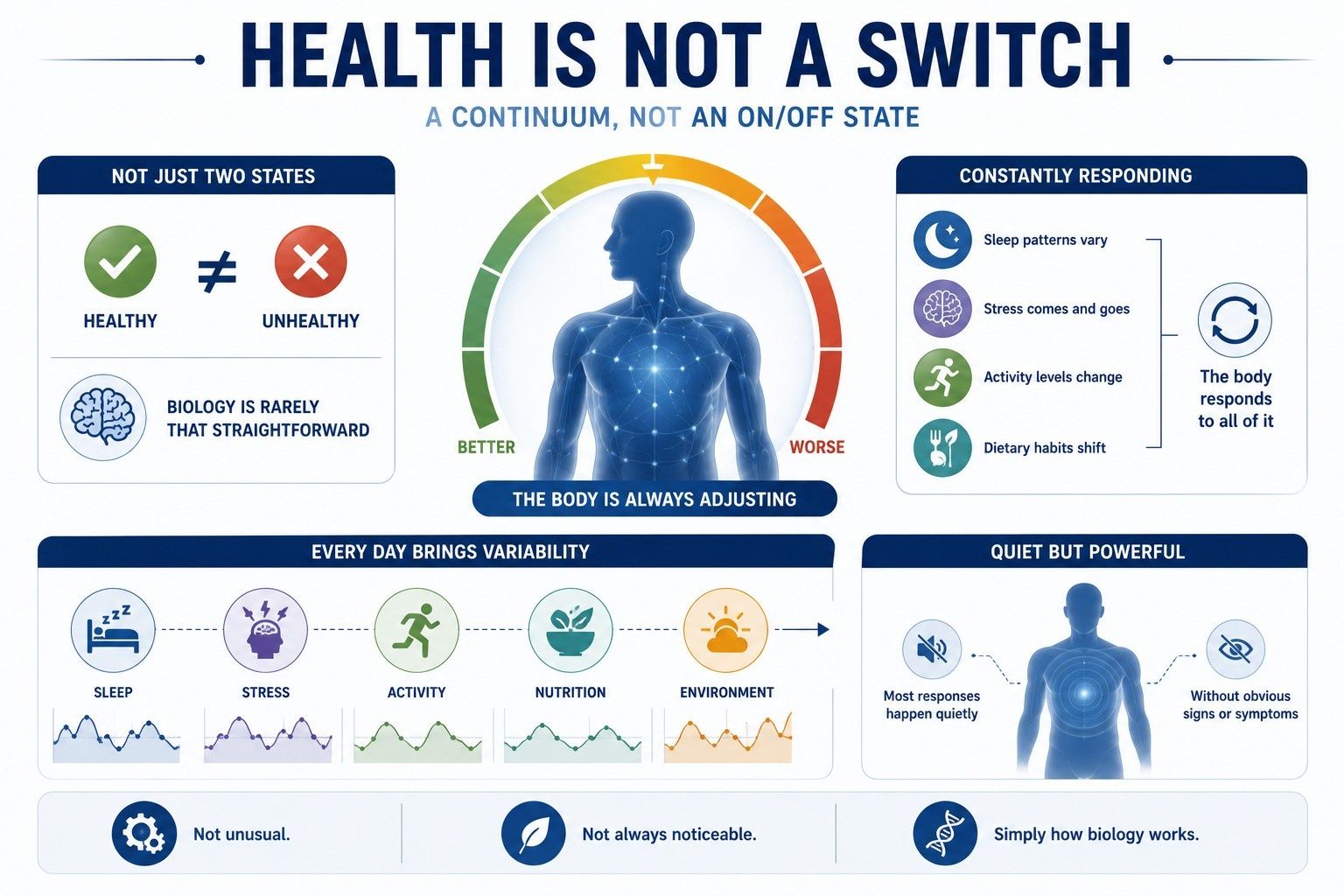
One reason health can be difficult to understand is that it rarely changes overnight.
Health is often discussed as though it exists in two states. Healthy or unhealthy. Well or unwell.
Biology is rarely that straightforward.
The body exists in a constant state of adjustment. It responds to changing circumstances every day. Sleep patterns vary. Stress comes and goes. Activity levels change. Dietary habits shift over time.
The body respondshttps://drwebmedcare.online/the-body-notices-what-the-mind-ignores-understanding-health-beyond-symptoms/ to all of it.
Most of these responses occur quietly, without producing obvious signs or symptoms.
That is not unusual. It is simply how biology works.
The Body Responds Before We Notice
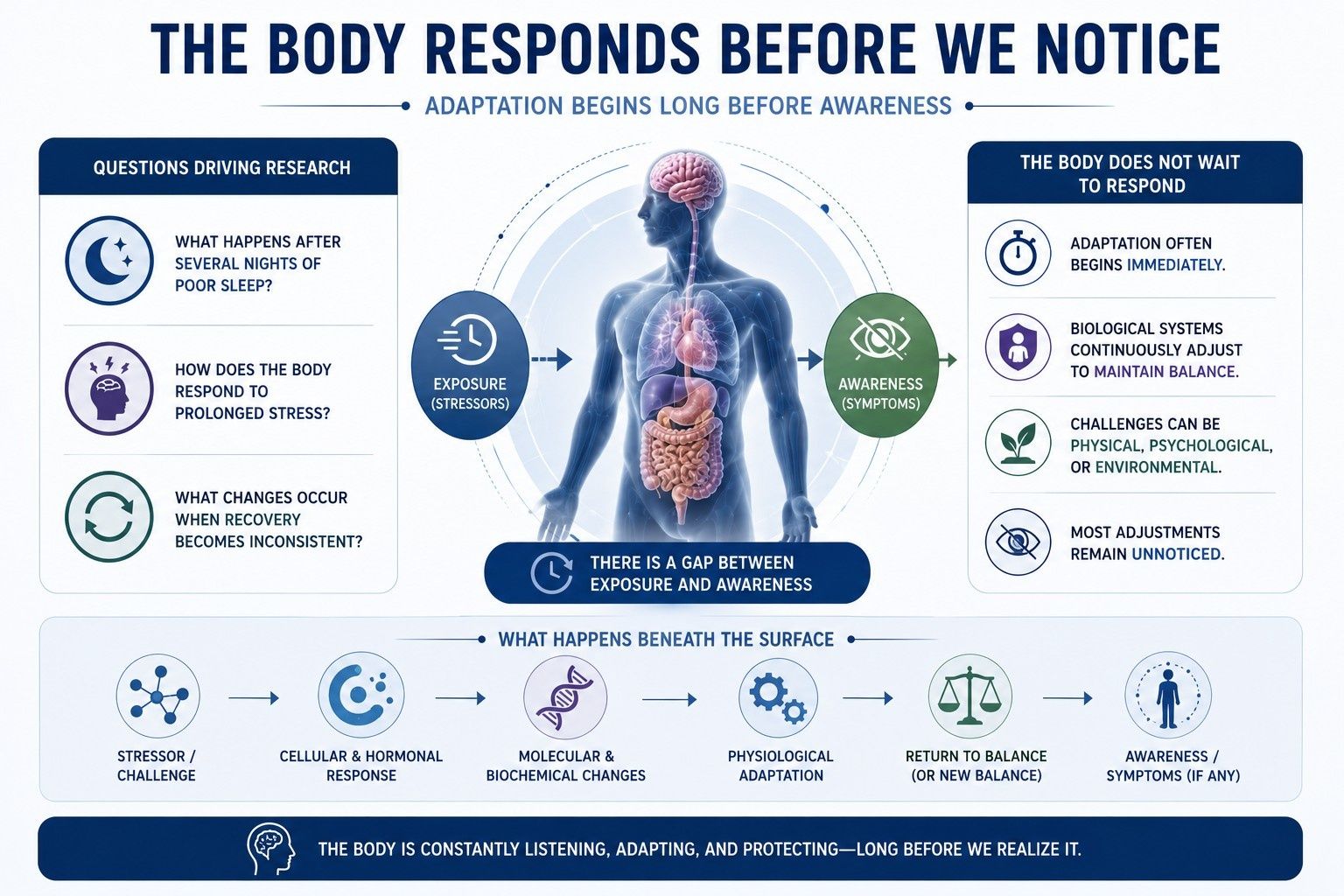
Researchers have become increasingly interested in understanding the period that exists between exposure and awareness.
What happens after several nights of poor sleep?
How does the body respond to prolonged stress?
What changes occur when recovery becomes inconsistent?
Questions like these are receiving growing attention because they highlight an important reality. The body does not wait for symptoms before it begins responding.
Adaptation https://drwebmedcare.online/why-recovery-is-a-biological-process-not-just-rest/often begins immediately.
Whether the challenge is physical, psychological, or environmental, biological systems continuously adjust in an effort to maintain balance.
Most of the time, these adjustments remain unnoticed.
Why Symptoms Matter and Why They Can Be Misleading
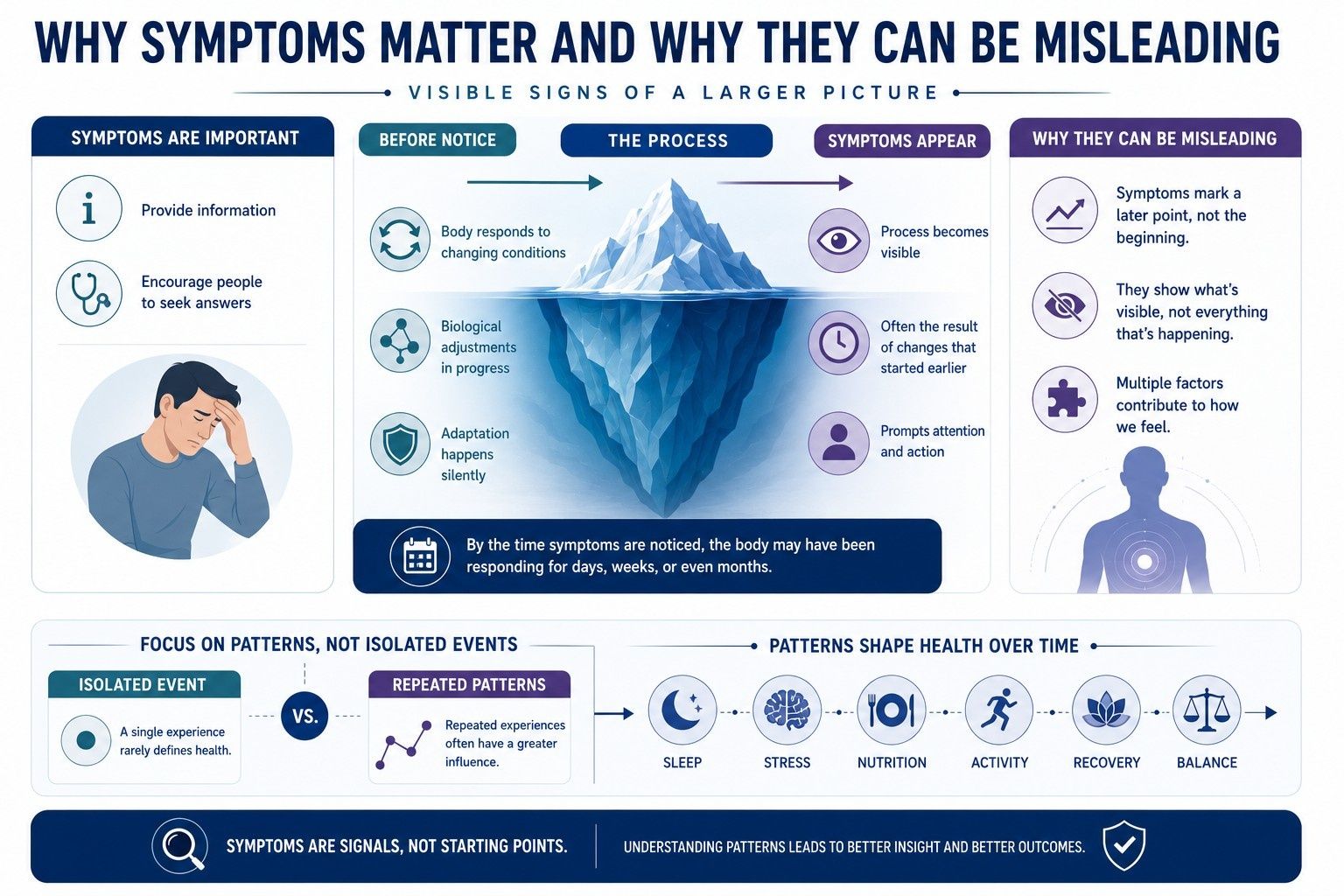
Symptoms are important.
They provide information and often encourage people to seek answers.
The problem is not that symptoms exist. The problem is the assumption that symptoms mark the beginning of a process.
In many cases, they may represent only the moment when a process becomes visible.
By the time a person notices a change in sleep, energy, digestion, or wellbeing, the body may already have been responding to changing conditions for some time.
This is one reason why modern health research increasingly focuses on patterns rather than isolated events.
A single experience rarely defines health.
Repeated experiences often have a greater influence.
Looking at Health Differently
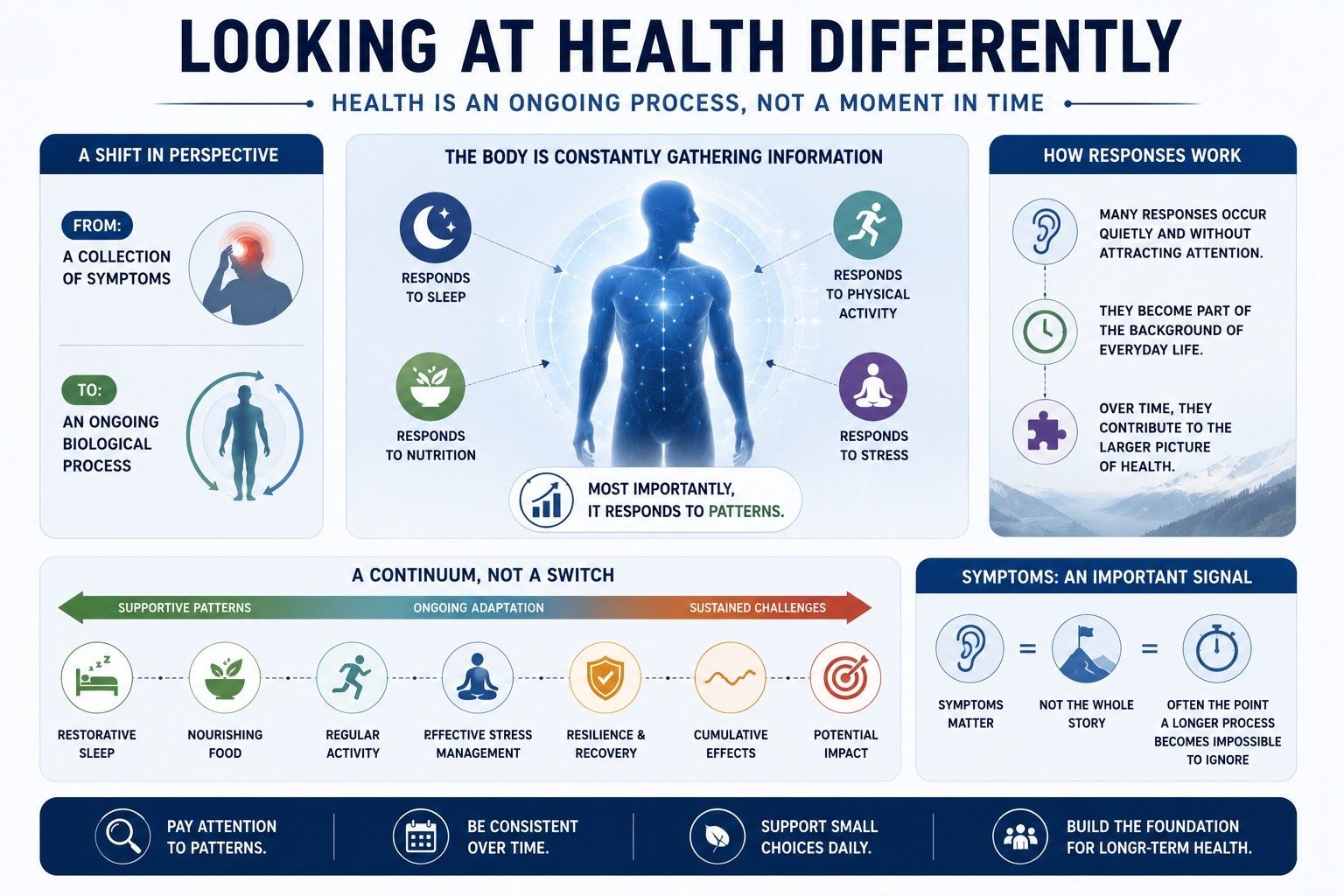
Perhaps one of the most useful shifts in perspective is to think about health as an ongoing process rather than a collection of symptoms.
The body is constantly gathering information from its environment.
It responds to sleep.
It responds to nutrition.
It responds to physical activity.
It responds to stress.
Most importantly, it responds to patterns.
Many of these responses occur quietly and without attracting attention. They become part of the background of everyday life.
Yet over time, they contribute to the larger picture of health.
Symptoms remain important, but they are not the entire story.
Often, they are simply the point at which a much longer biological process becomes impossible to ignore.