
The Hidden Conversations Inside the Immune System
When people think about the immune system, they usually think about protection.
They think about what happens when a virus enters the body, when an infection develops, or when recovery begins after illness.
That way of thinking makes sense.
After all, the protective role of the immune system is the part we notice most.
What receives far less attention is communication.
Yet from an immunology perspective, communication may be one of the immune system’s most important functions.
The immune system is often described as a defense network, but networks do not function through strength alone. They function through the exchange of information.
In many ways, the immune system spends as much time communicating as it does protecting.
A System That Depends on Information
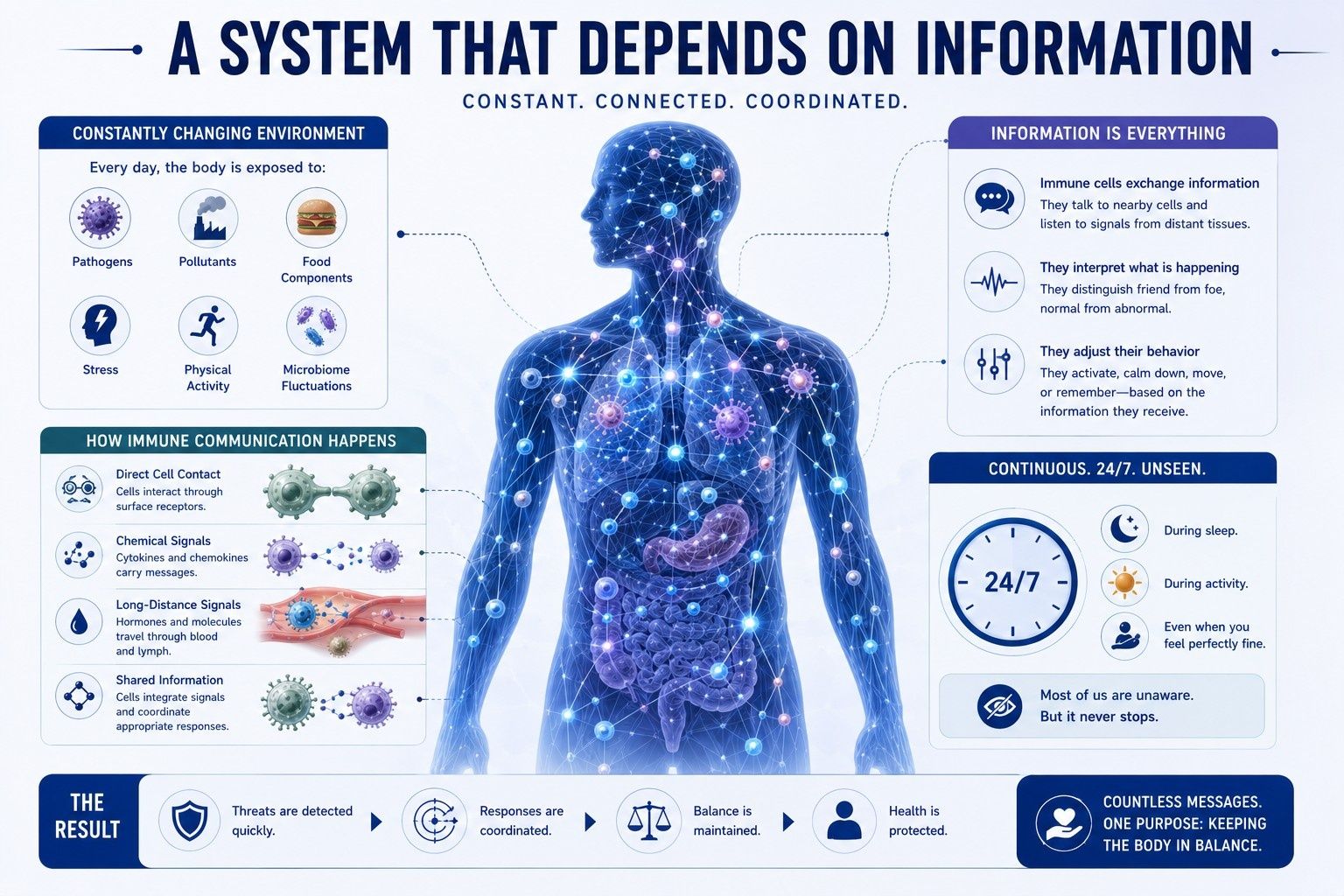
Every day, billions of cells throughout the body are exposed to changing conditions.
The immune system must constantly interpret what is happening within this environment.
To do that, immune cells exchange information.
They communicate with neighboring cells, respond to signals from distant tissues, and adjust their behavior according to the information they receive.
This communication is not occasional.
It is continuous.
Even on days when we feel completely healthy, countless biological messages are being exchanged throughout the body.
Most of us remain entirely unaware of these interactions.
Yet they are taking place every moment.
Why Communication Matters
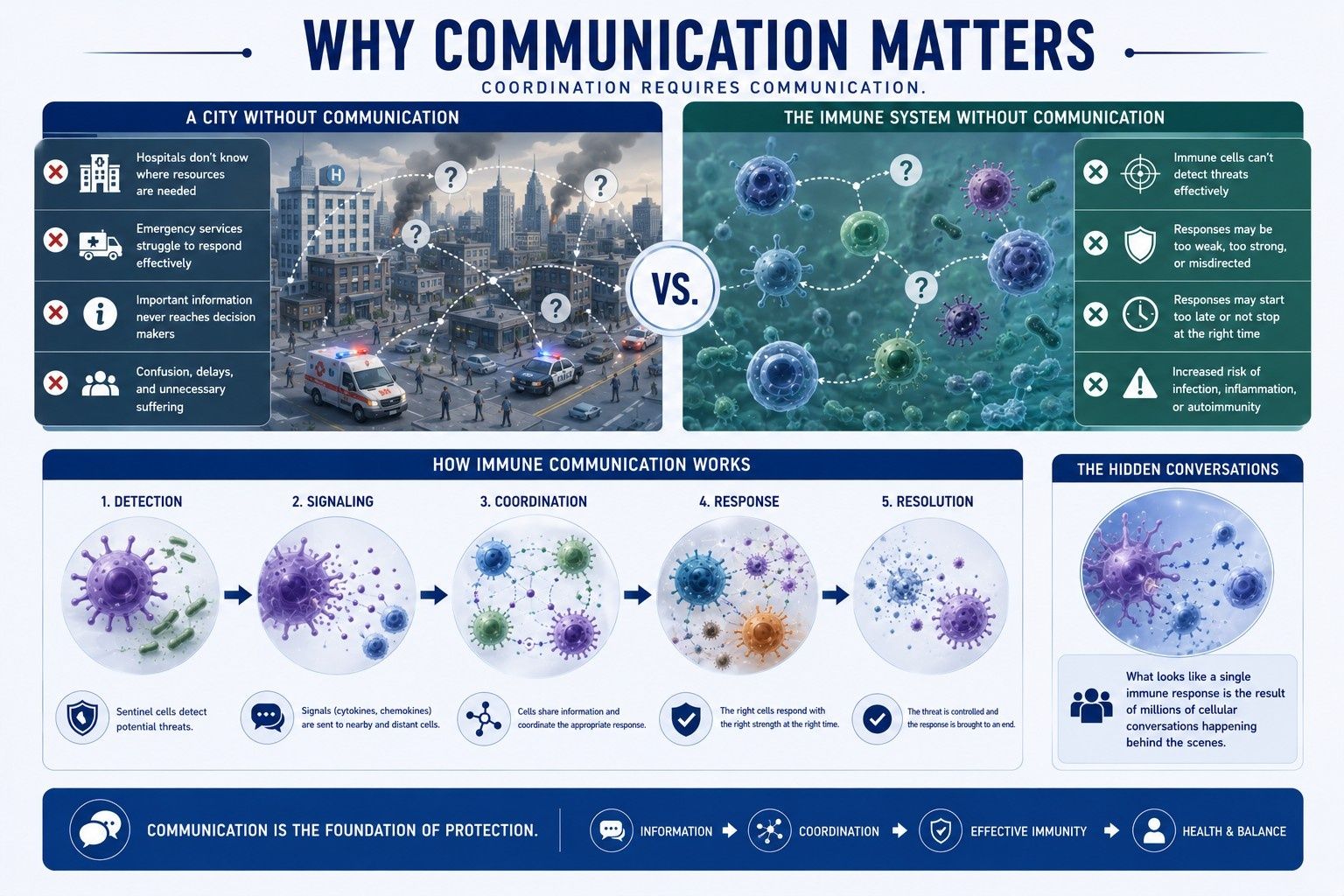
Imagine trying to coordinate a large city without communication.
Hospitals would not know where resources were needed.
Emergency services would struggle to respond effectively.
Important information would never reach the people responsible for making decisions.
The immune system https://drwebmedcare.online/why-low-immunity-is-not-the-full-story/faces a similar challenge.
Protection requires coordination.
Coordination requires communication.
Without a reliable flow of information, immune cells would have difficulty determining when to respond, how strongly to respond, or when a response should come to an end.
What appears from the outside as a single immune response is often the result of countless cellular conversations occurring behind the scenes.
More Than a Response to Illness
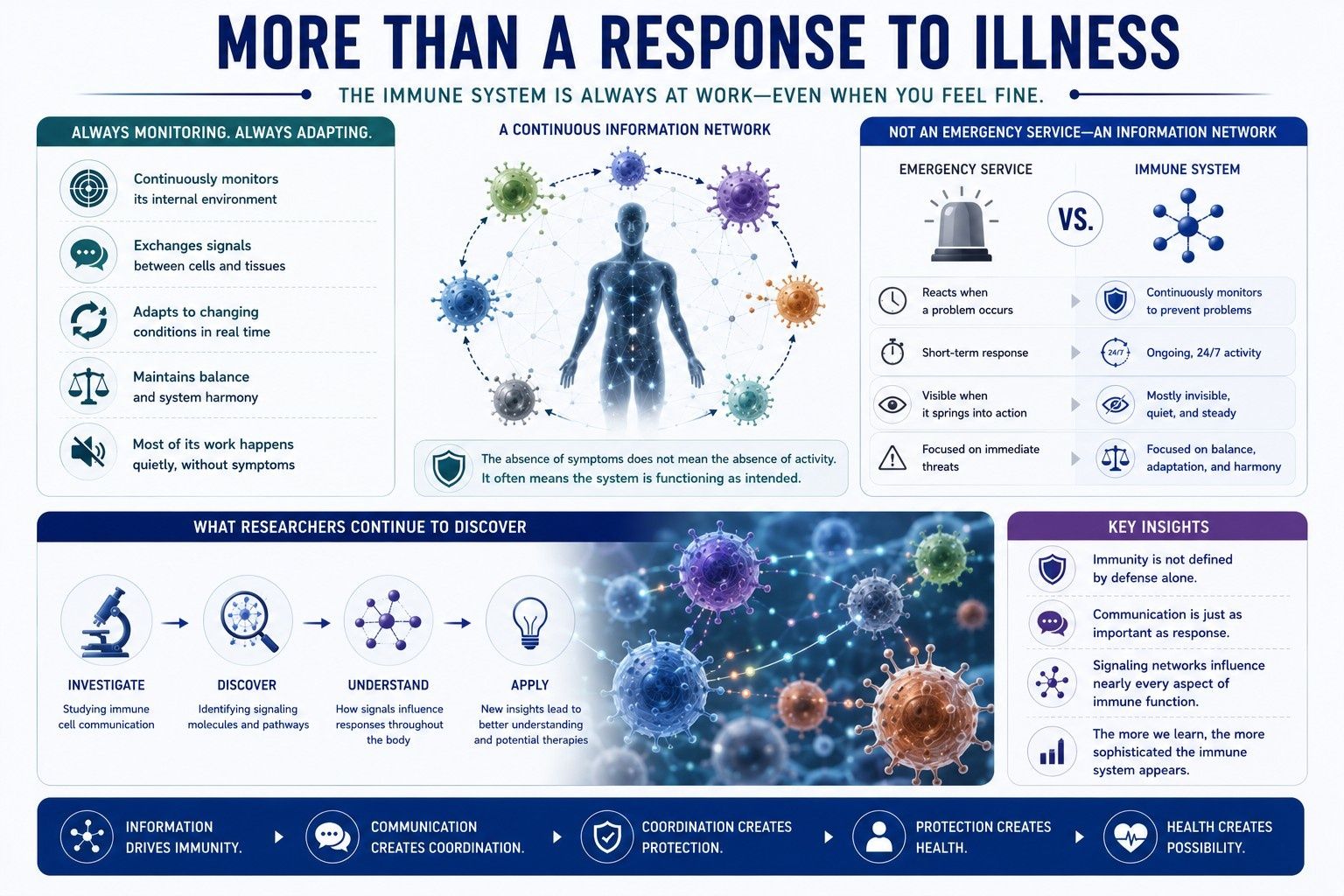
One of the most interesting insights from modern immunology is that the immune system is not simply waiting for problems to appear.
Its activity is not limited to moments of illness.
Immune cells are continuously monitoring their environment, exchanging signals, and adapting to changing conditions.
In many respects, the immune system behaves less like an emergency service and more like an ongoing information network.
Most of its work occurs quietly.
The absence of symptoms does not mean the absence of activity.
It often means the system is functioning as intended.
What Researchers Continue to Discover
The study of immune communication has become one of the most fascinating areas of biomedical research.
Scientists continue to investigate how immune cells exchange information and how those signals influence biological responses https://drwebmedcare.online/what-happens-when-stress-becomes-normal/throughout the body.
What has become increasingly clear is that immunity cannot be understood through defense alone.
The ability to communicate is just as important as the ability to respond.
The more researchers learn about these signaling networks, the more sophisticated the immune system appears.
Looking at Immunity Differently
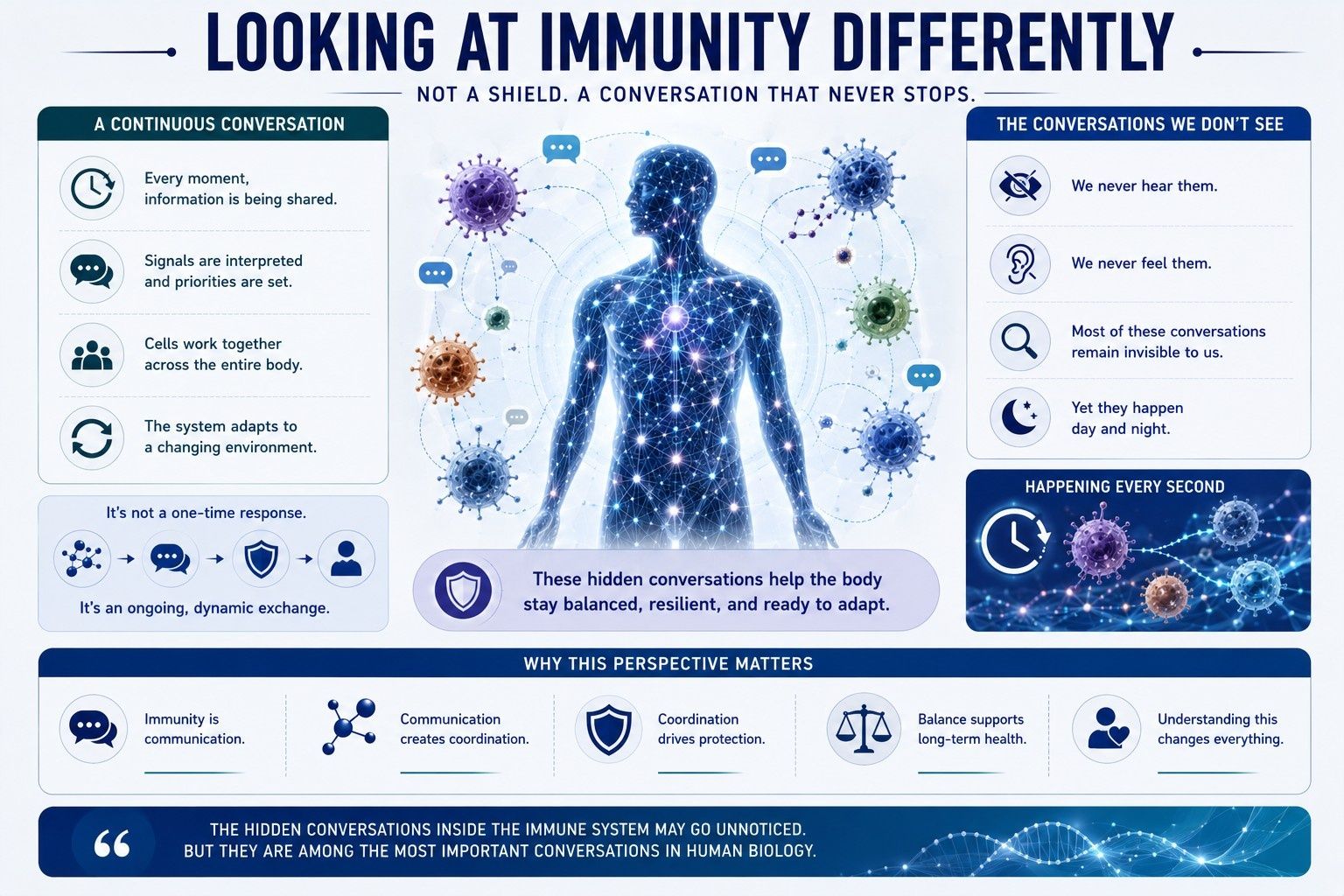
Perhaps the immune system is best understood not as a shield, but as a conversation.
A conversation that never truly stops.
Every moment, information is being shared, interpreted, and acted upon by cells working together across the body.
Most of these conversations remain invisible to us.
We never hear them.
We never feel them.
Yet they play an essential role in helping the body adapt to an ever-changing environment.
The hidden conversations inside the immune system may go unnoticed.
But they are among the most important conversations taking place within human biology.https://drwebmedcare.online/why-recovery-is-a-biological-process-not-just-rest/