
Why “Low Immunity” Is Not the Full Story
Few health phrases are used as casually as “low immunity.”
Someone catches frequent infections. Recovery seems to take longer than expected. A person appears to get sick more often than others. Before long, the explanation appears:
“Their immunity must be low.”
The phrase is familiar and easy to understand.
The problem is that it can sometimes make the immune system seem much simpler than it really is.
From an immunology perspective, an interesting question immediately follows:
What exactly do we mean by “low immunity”?
The answer is often more complex than most people expect.
The Immune System Is Not a Single Thing
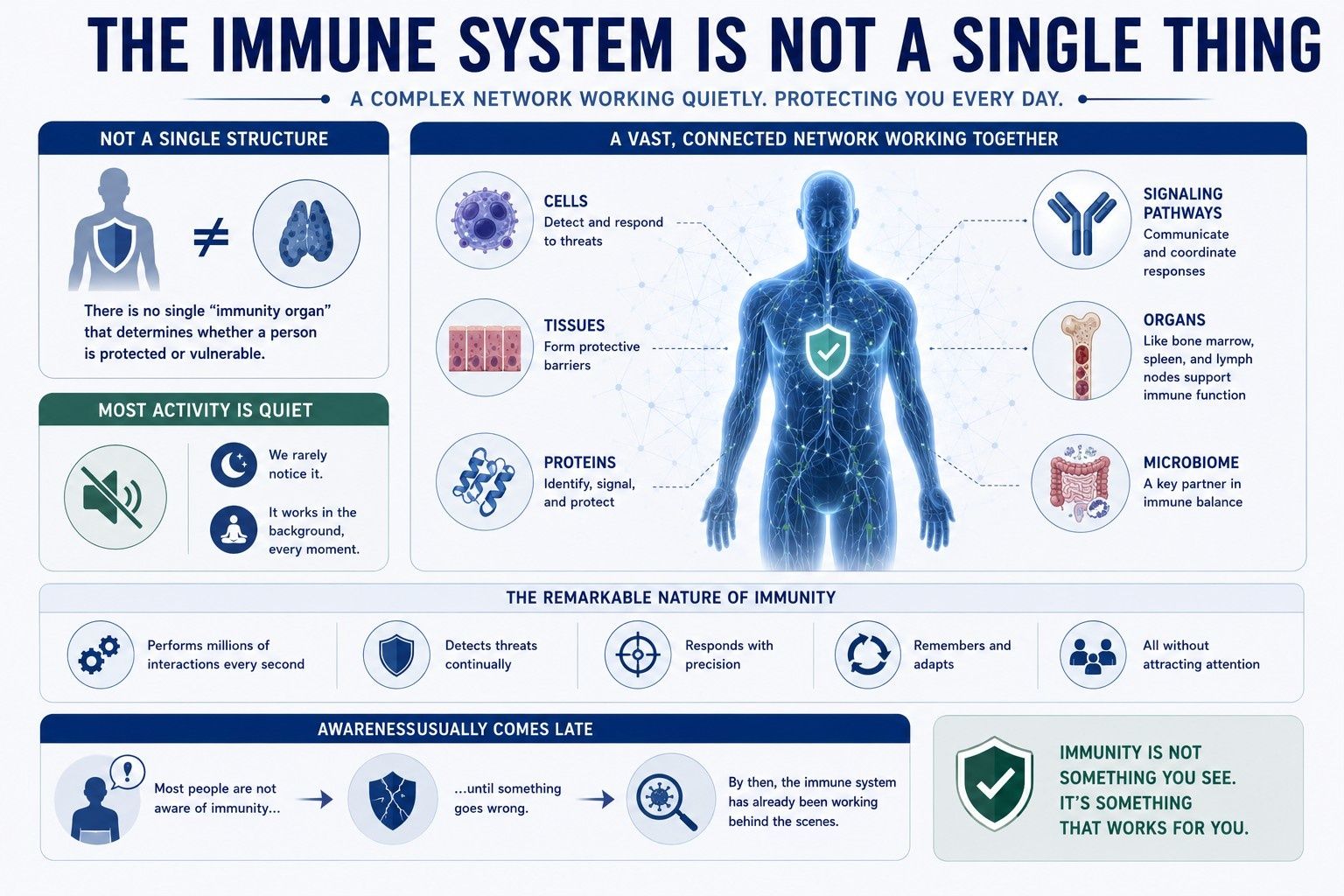
One reason immunity can be difficult to understand is that the immune system is not a single structure within the body.
There is no single “immunity organ” that determines whether a person is protected or vulnerable.
Instead, the immune system functions through a vast network of cells, tissues, proteins, and signaling pathways that communicate continuously with one another.
Much of this activity takes place quietly.
We rarely notice it.
In fact, one of the most remarkable aspects of the immune system is how much work it performs without attracting attention.
Most people become aware of immunity only when something goes https://drwebmedcare.online/before-symptoms-appear-the-body-has-already-begun-responding/
Why the Idea of “Low Immunity” Can Be Misleading
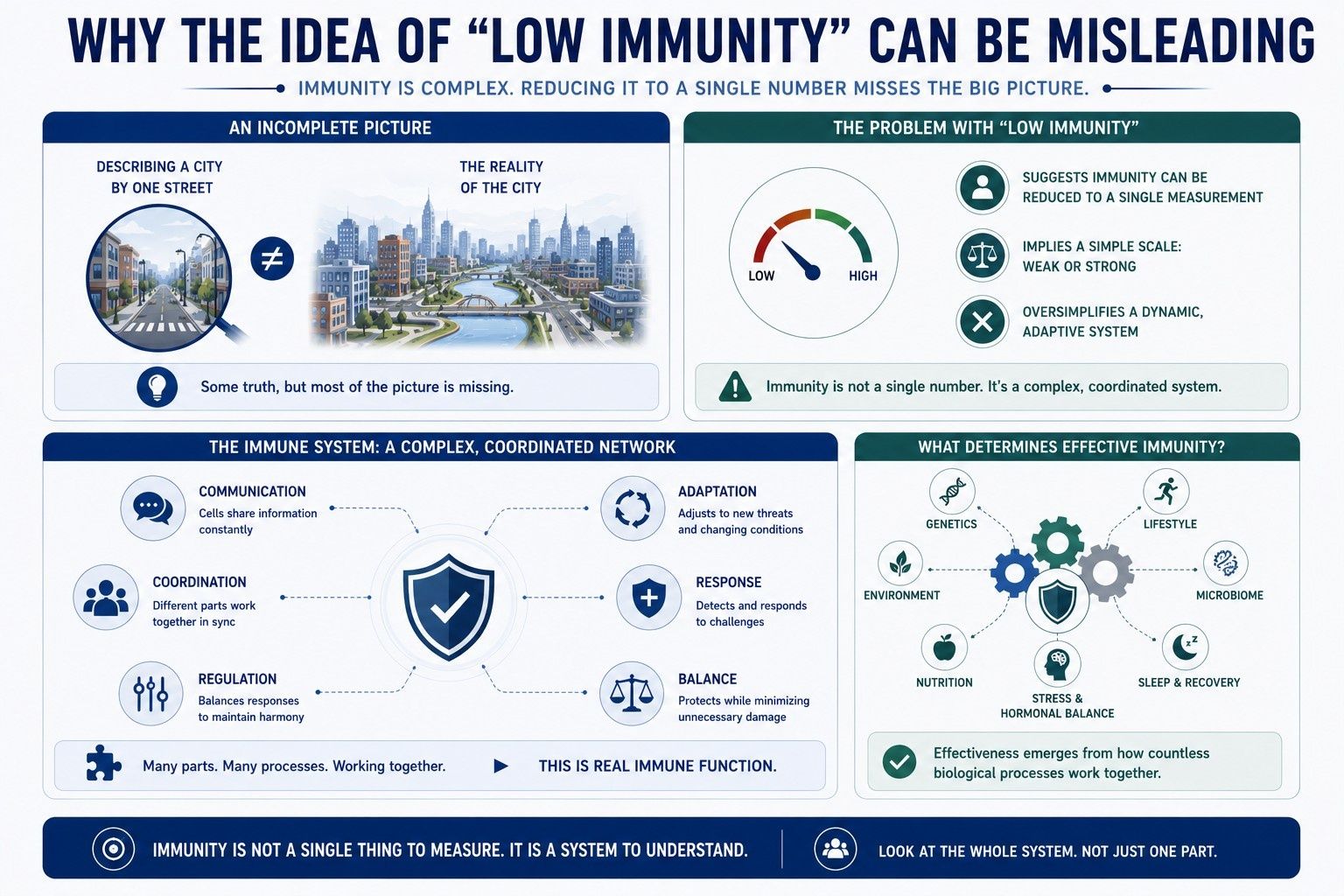
Imagine describing an entire city by looking at only one street.
The description might contain some truth, but it would miss most of the picture.
The phrase “low immunity” can sometimes create a similar problem.
It suggests that immune function can be reduced to a single measurement, as though immunity exists on a simple scale from weak to strong.
Modern immunology paints a different picture.
The immune system depends on communication, coordination, regulation, and adaptation occurring simultaneously.
Its effectiveness is not determined by one factor alone.
It emerges from how countless biological processes work together.
What Researchers Have Learned
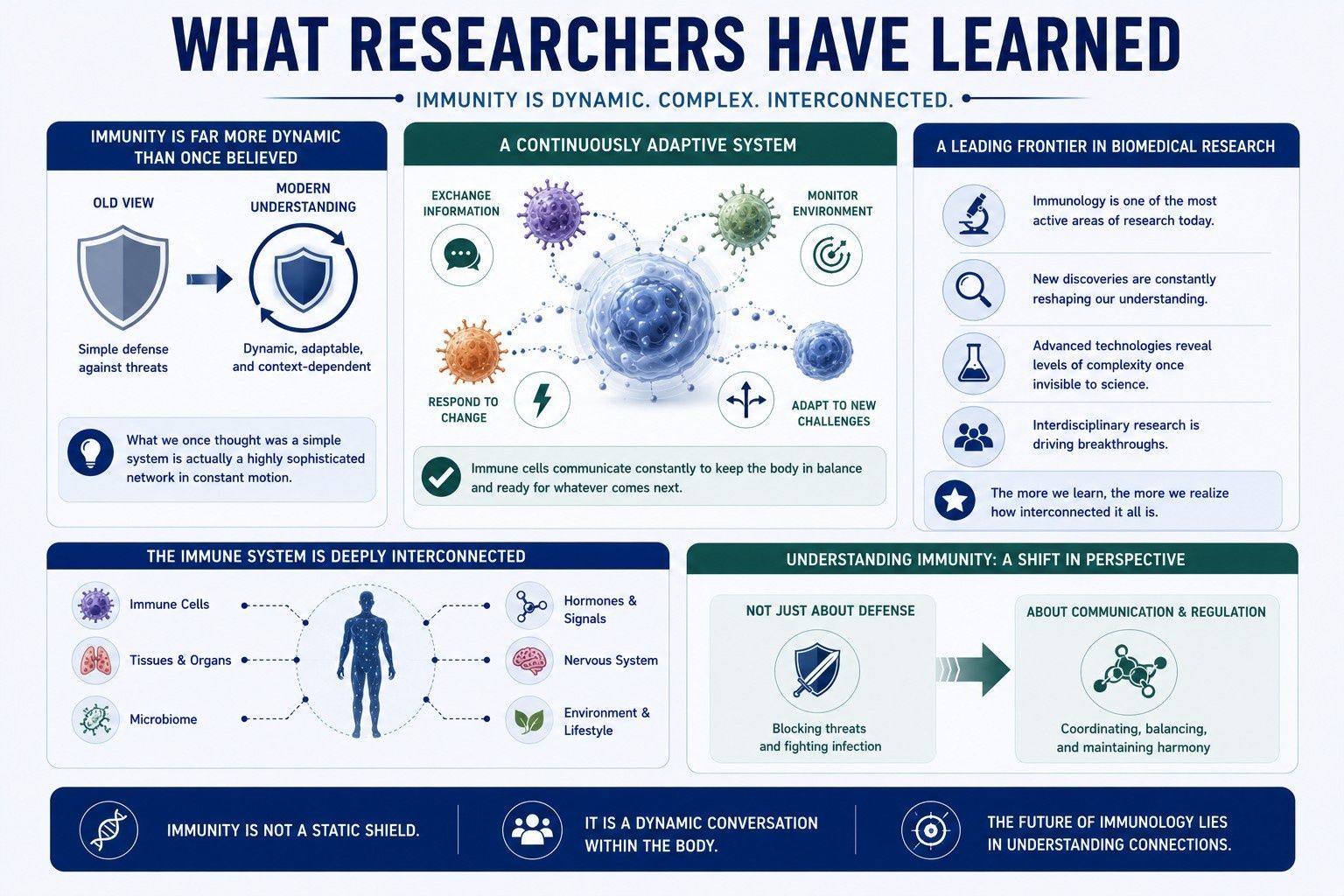
Over the past few decades, scientists have learned that immunity is far more dynamic than previously believed.
Immune cells are constantly exchanging information.
They monitor the body’s environment, respond to changing conditions, and adapt to new challenges.
This complexity is one reason immunology remains one of the most active areas of biomedical research.
The more researchers learn about the immune system, the more they appreciate how interconnected its components truly are.
Understanding immunity is no longer simply a question of defense.
It is increasingly a question of communication and regulation.
Looking Beyond Simple Labels
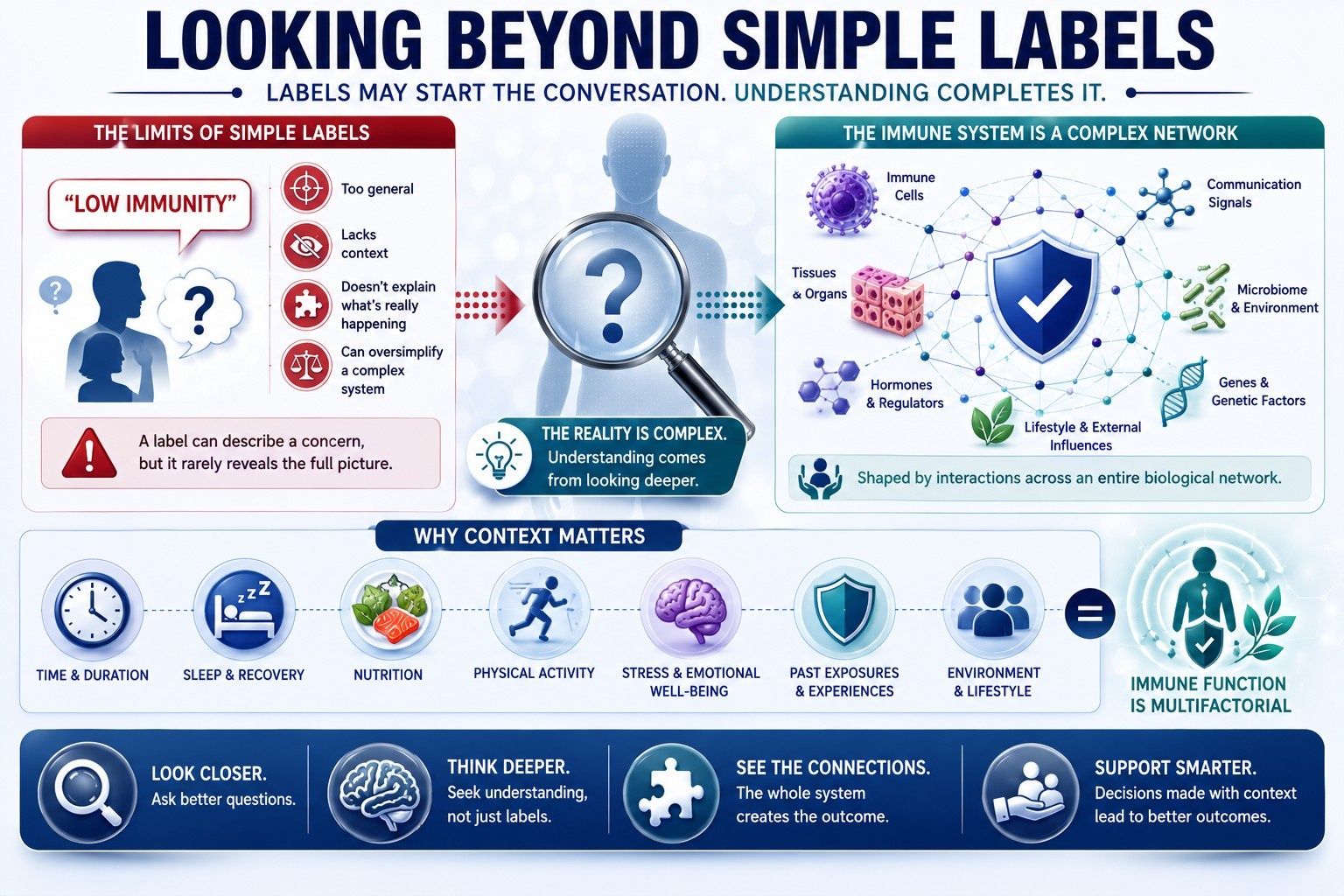
Simple labels are useful because they make complicated ideas easier to discuss.
The difficulty arises when those labels begin to replace understanding.
The phrase “low immunity” may describe a concern, but it rarely explains what is actually happening within the immune system.
Biology is rarely that straightforward.
The immune system is not defined by a single characteristic.https://drwebmedcare.online/why-recovery-is-a-biological-process-not-just-rest/
It is shaped by interactions occurring across an entire biological network.
A Different Way to Think About Immunity
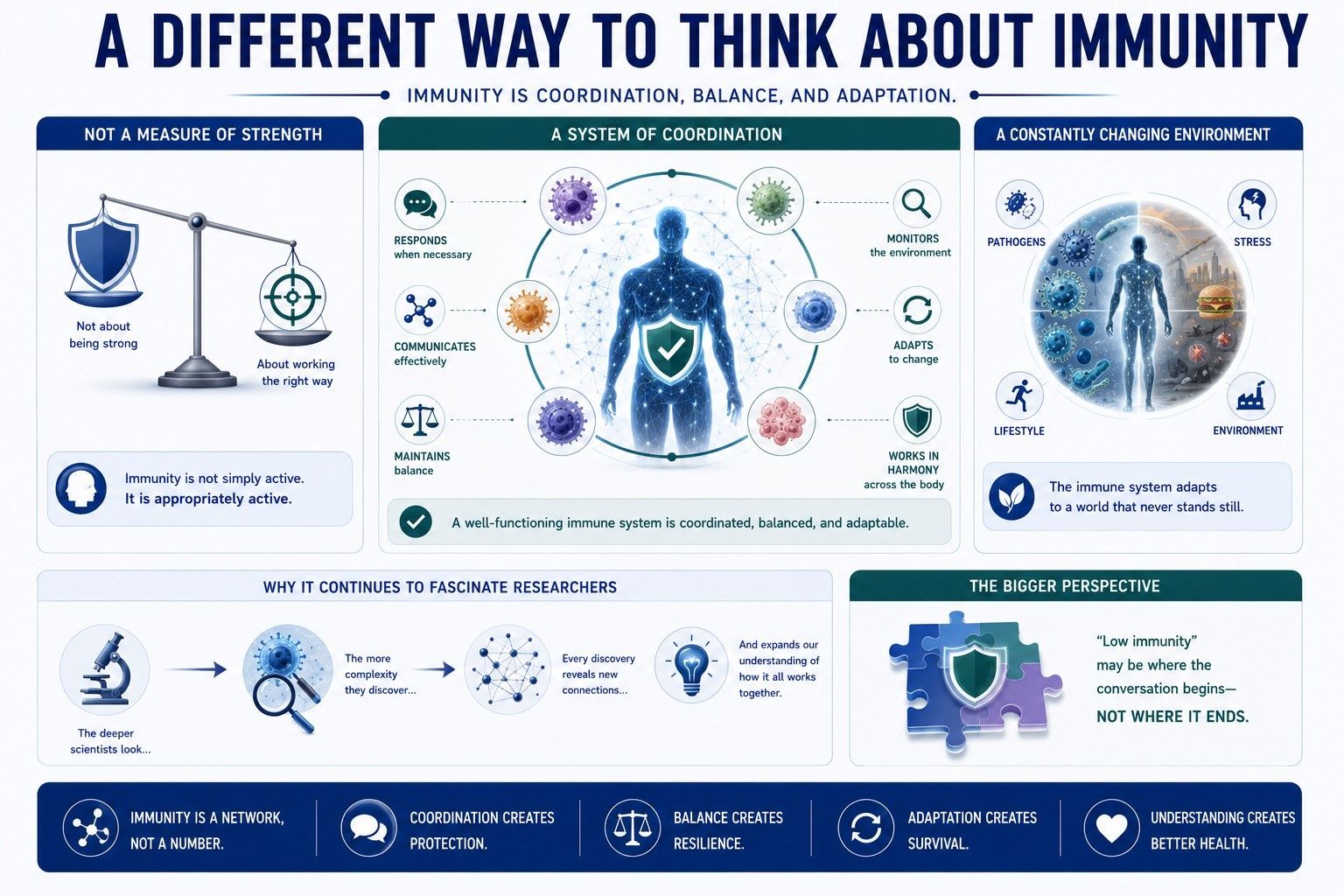
Perhaps the most useful perspective is to think of immunity not as a measure of strength, but as a system of coordination.
A well-functioning immune system is not simply active.
It is appropriately active.
It responds when necessary, communicates effectively, and maintains balance within a constantly changing environment.https://drwebmedcare.online/what-happens-when-stress-becomes-normal/
This may be why the immune system continues to fascinate researchers.
The deeper scientists look, the more complexity they discover.
And that complexity reminds us that “low immunity” is often only the beginning of the conversation, not the complete explanation.