
What Happens When Stress Becomes Normal?
Most people can recognize stress when it first appears.
A difficult week at work feels different. Sleep becomes lighter. The mind feels busier than usual. Energy is not quite the same. Something feels out of balance.
The challenge is that stress rarely stays new for long.
Given enough time, people adapt to it.
What once felt unusual can gradually become familiar. A busy schedule becomes routine. Poor sleep becomes expected. Constant pressure begins to feel like part of everyday life.
Eventually, many people stop asking whether they are stressed at all.
They simply assume this is what normal feels like.
From a biological perspective, however, familiar and normal are not necessarily the same thing.
The Body Does Not Adapt by Ignoring Stress
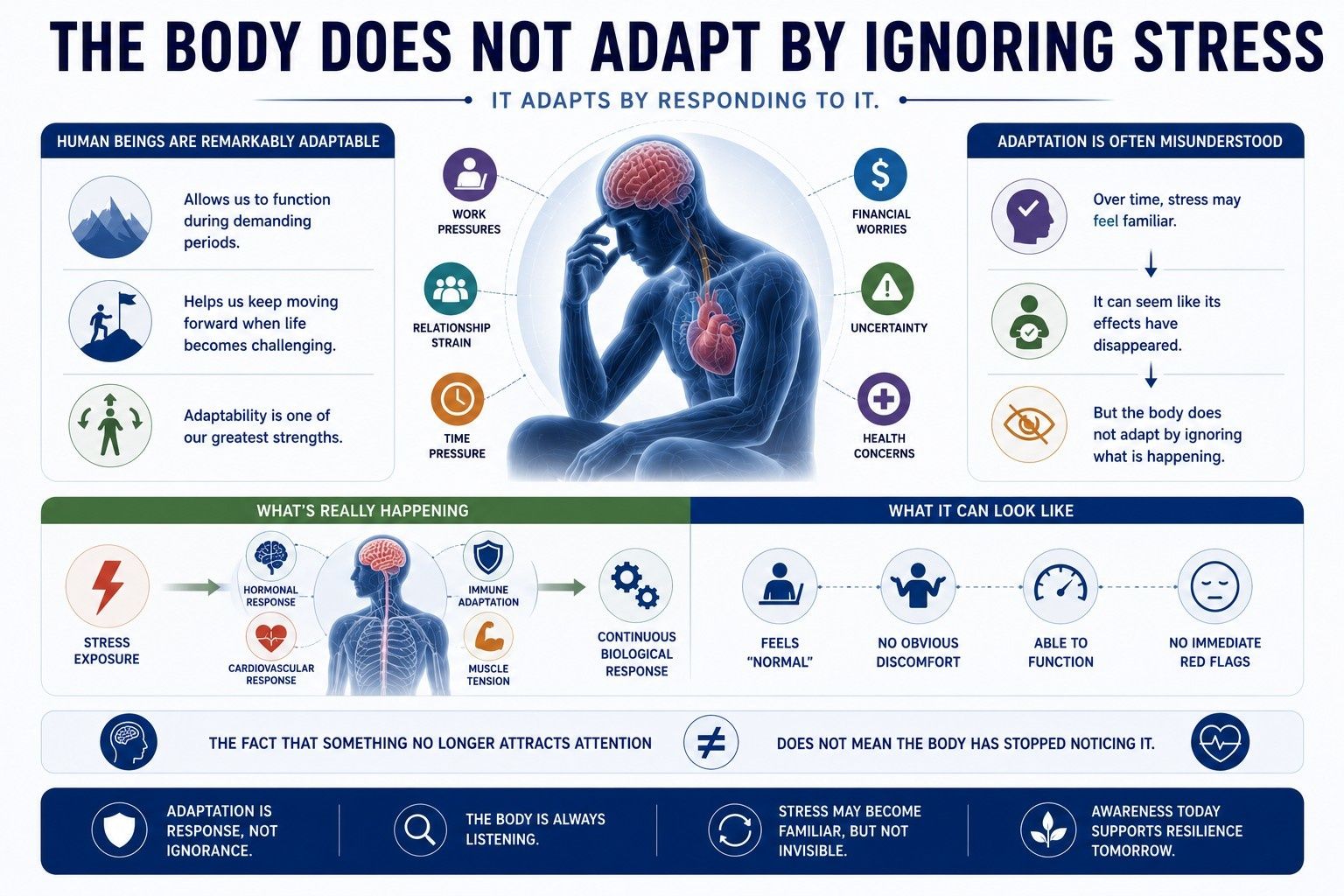
Human beings are remarkably adaptable.
This ability allows us to function during demanding periods and continue moving forward when life becomes challenging.
Yet adaptation is sometimes misunderstood.
When people become accustomed to stress, it can feel as though its effects have disappeared.
In reality, the body does not adapt by pretending stress is absent.
It adapts by responding to it.
The fact that something no longer attracts attention does not mean the body has stopped noticing it.
When Stress Becomes Part of Daily Life
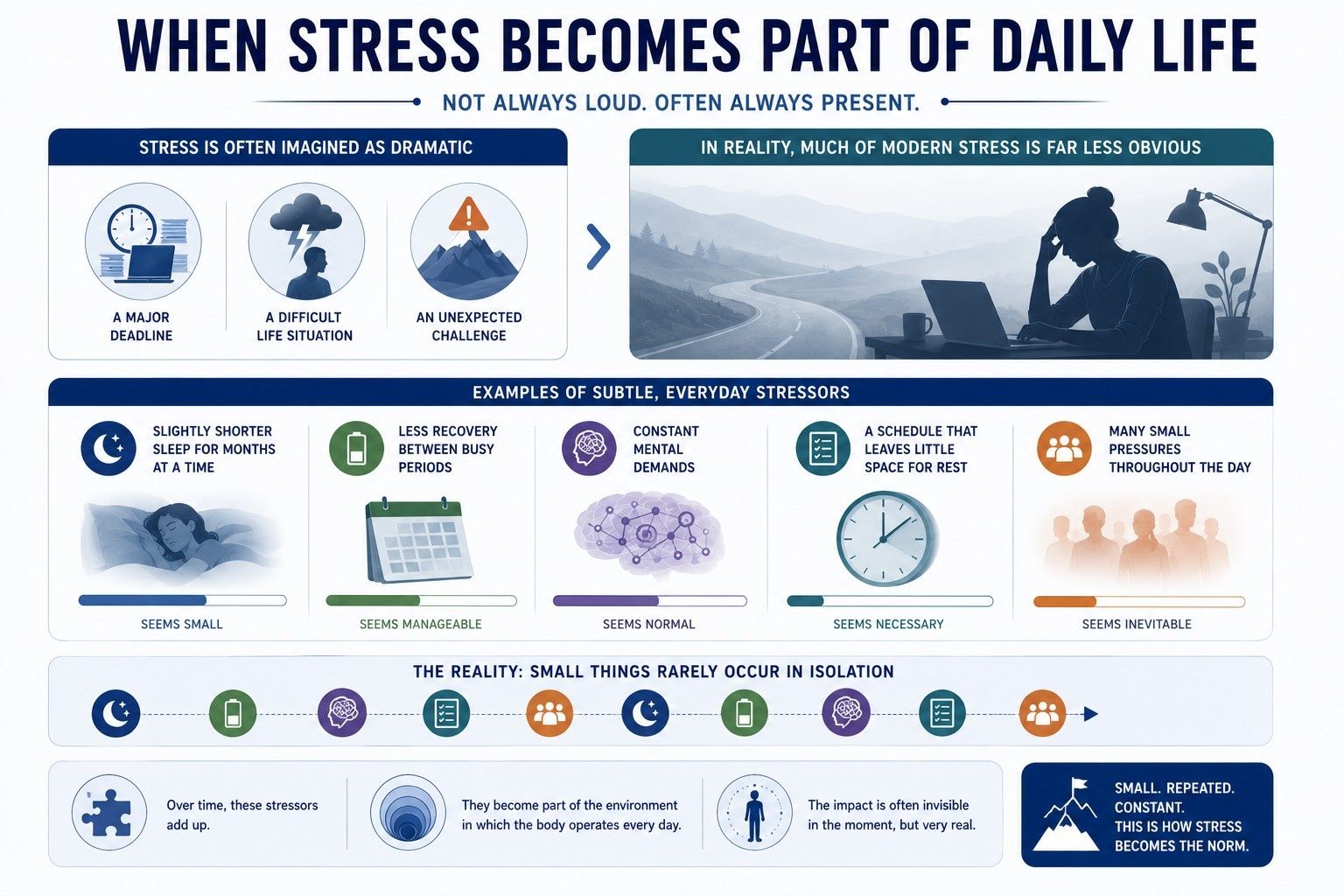
Stress is often imagined as a dramatic event.
A major deadline.
A difficult life situation.
An unexpected challenge.
In reality, much of modern stress is far less obvious.
It may appear as slightly shorter sleep for months at a time.
Less recovery between busy periods.
Constant mental demands.
A schedule that leaves little space for rest.
None of these experiences seem particularly dramatic on their own.
The difficulty is that they rarely occur in isolation.
Over time, they become part of the environment in which the body operates every day.
Why Familiarity Can Be Misleading
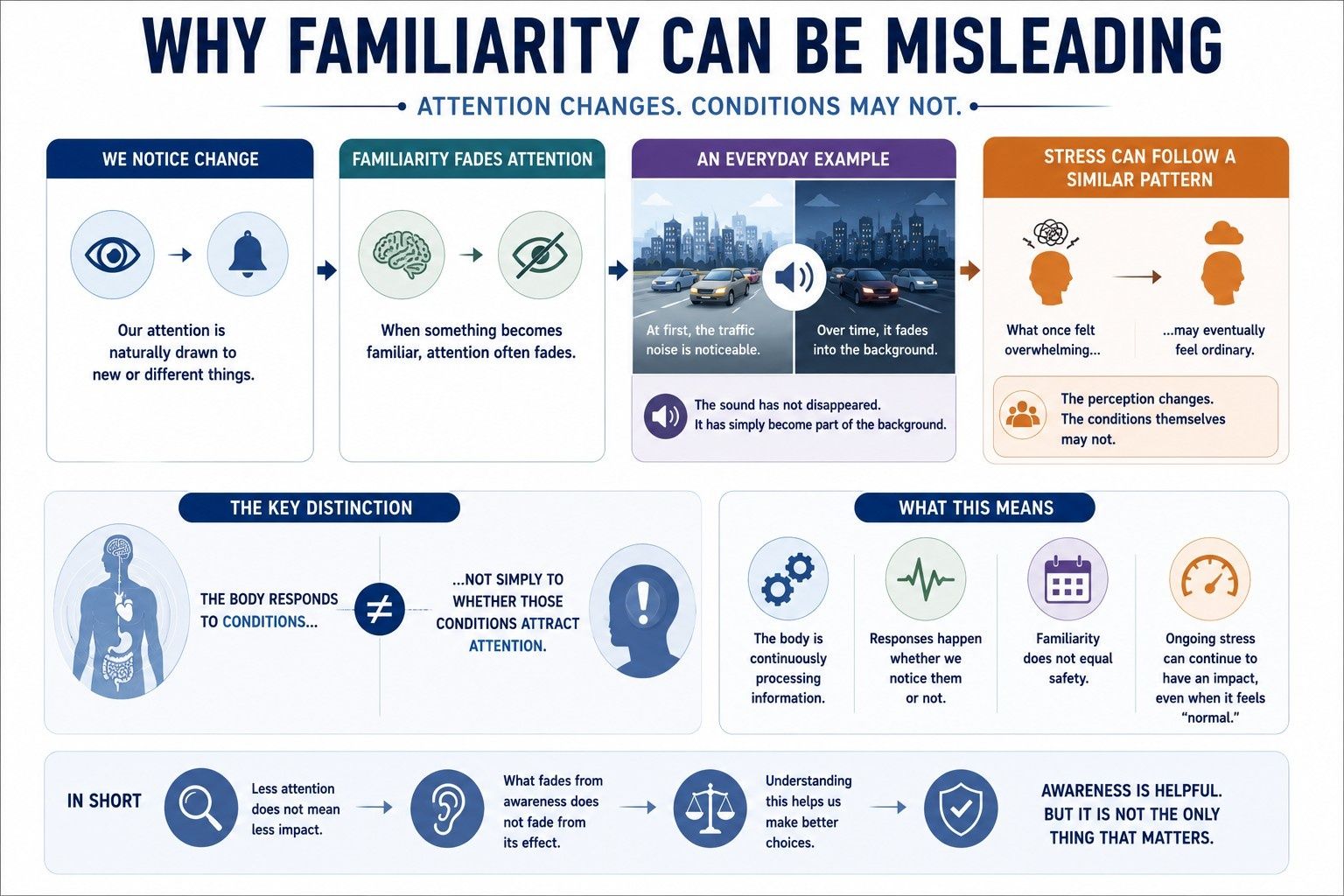
People naturally pay attention to change.
When something becomes familiar, attention often fades.
This happens with many aspects of life.
A person who lives near a busy road eventually notices the traffic less. The sound has not disappeared. It has simply become part of the background.
Stress can follow a similar pattern.
What once felt overwhelming may eventually feel ordinary.
The perception changes.
The conditions themselves may not.
This distinction is important because the body responds to conditions, not simply to whether those conditions attract attention.
The Missing Piece: Recovery
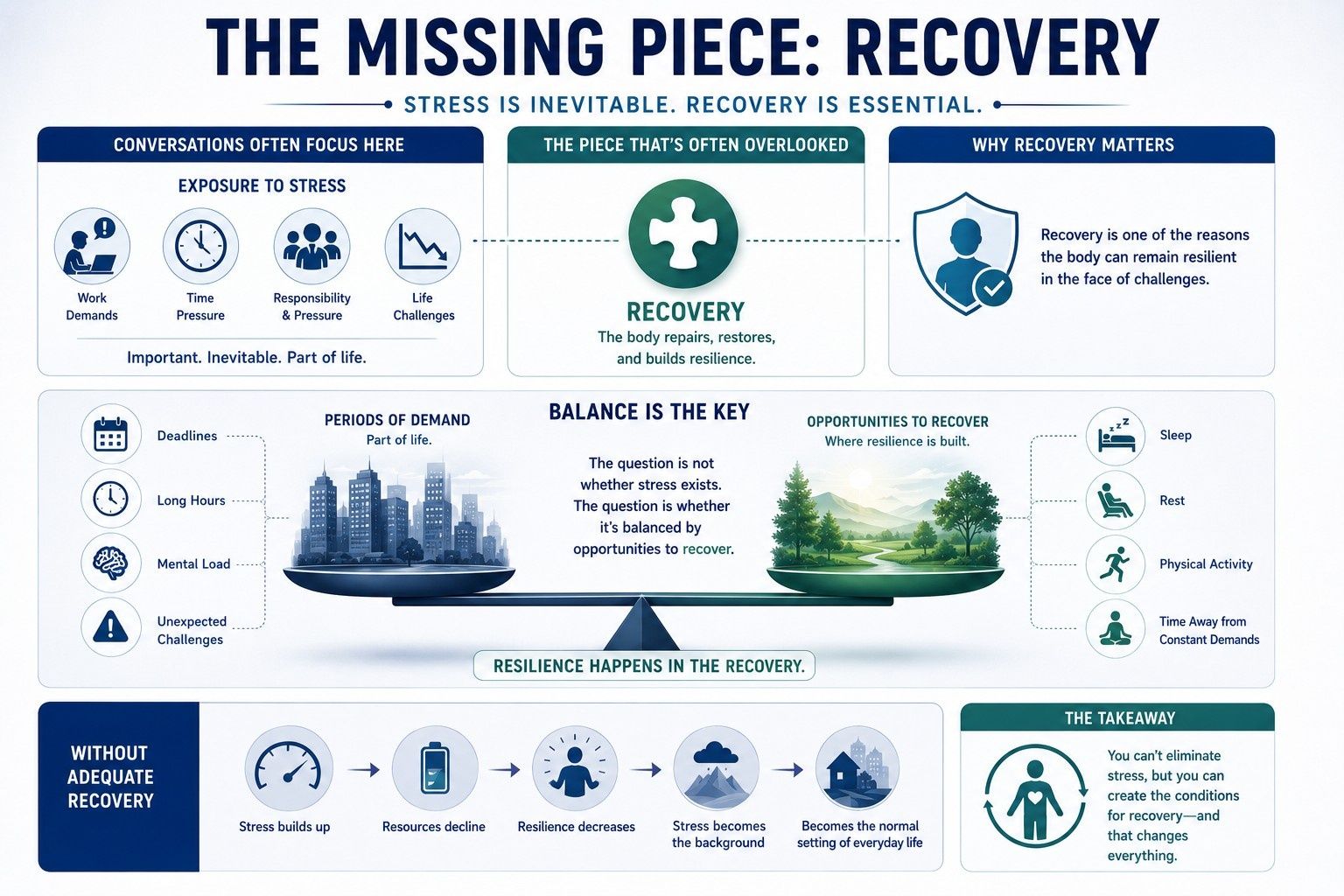
Conversations about stress often focus on exposure.
Recovery receives far less attention.
Yet recovery is one of the reasons the body can remain resilient in the face of challenges.
Periods of demand are part of life.
The question is whether those periods are balanced by opportunities to recover.
Sleep.Rest.Physical activity.
Time away from constant demands.
These experiences help create the conditions in which recovery can occur.
Without adequate recovery, stress may gradually become the background setting of everyday life.
Looking at Stress Differently
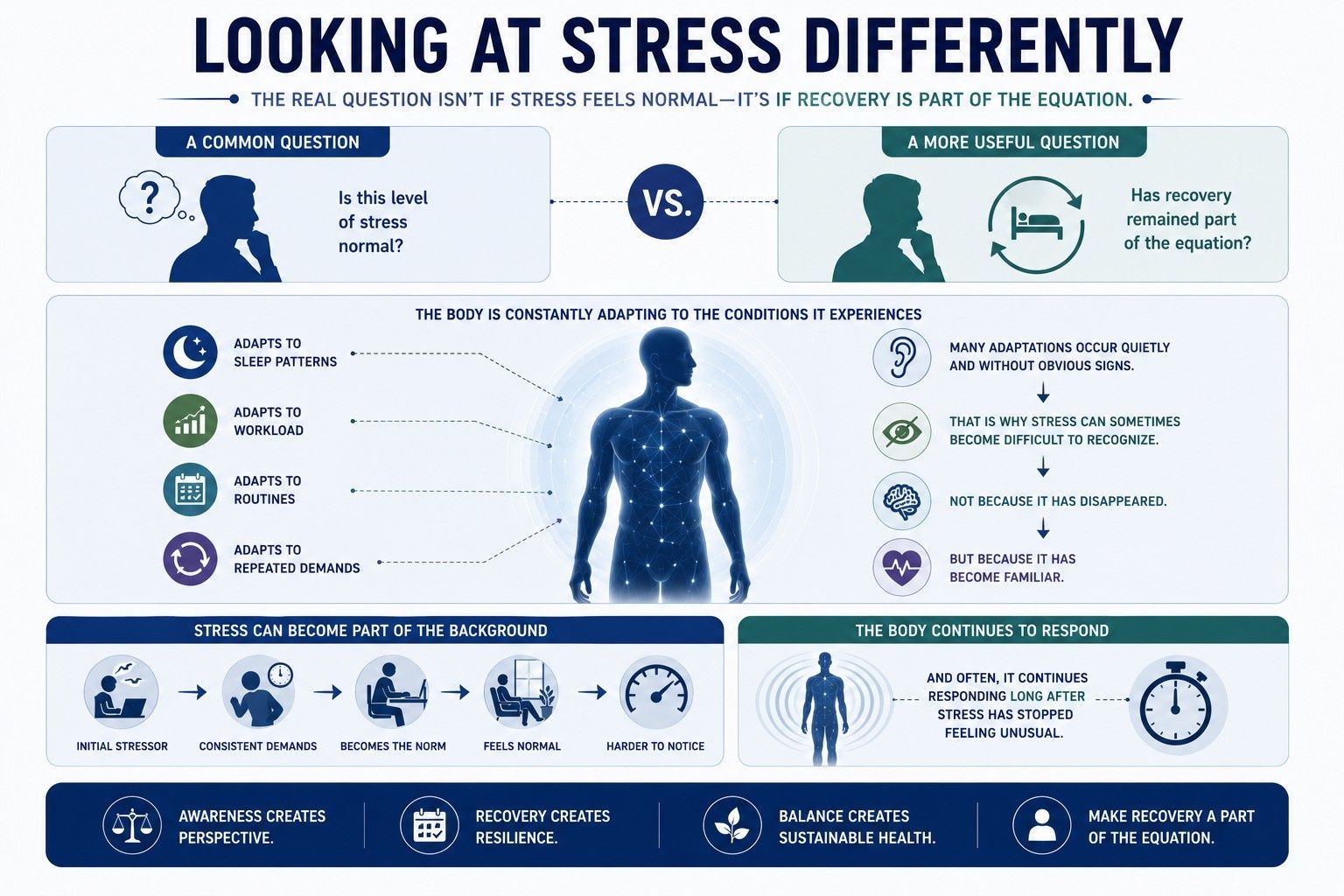
Perhaps the most useful question is not whether stress feels normal.
A more useful question may be whether recovery has remained part of the equation.
The body is constantly adapting to the conditions it experiences.
It adapts to sleep patterns.
It adapts to workload.
It adapts to routines.
It adapts to repeated demands.
Many of these adaptations occur quietly and without obvious signs.
That is why stress can sometimes become difficult to recognize.
Not because it has disappeared.
But because it has become familiar.
The body, however, continues to respond.
And often, it continues responding long after stress has stopped feeling unusual.