
The Body Notices What the Mind Ignores: Understanding Health Beyond Symptoms
Most people do not spend much time thinking about their health when everything appears normal.
Health tends to attract attention only when something changes. Sleep becomes disrupted. Energy levels feel different. Digestion becomes less predictable. A new symptom appears.
Until that point, many of the processes taking place within the body remain largely unnoticed.
This creates an interesting contrast.
The mind often pays attention to symptoms.
The body pays attention to patterns.
Long before a person notices a change in how they feel, the body has already been responding to daily experiences. Every meal, every night of sleep, every stressful week, and every period of recovery becomes part of the environment to which the body must adapt.
Most of these responses occur quietly.
We do not feel immune cells communicating with one another. We do not notice countless biochemical reactions taking place throughout the day. We are rarely aware of the adjustments the body continuously makes in an effort to maintain balance.
Yet these processes never stop.
Health Is Often Shaped by Repetition
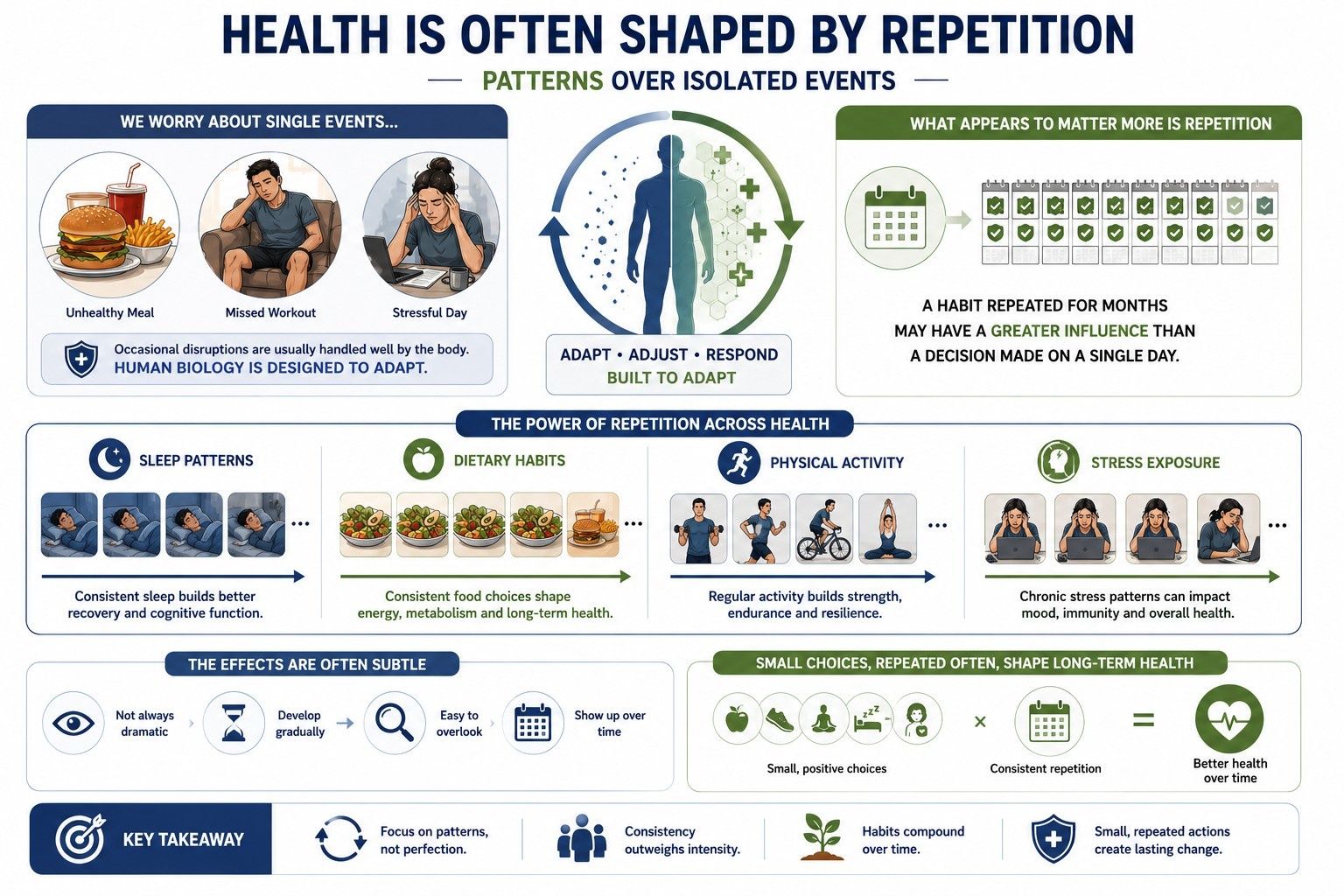
One of the more useful ways to think about health is to focus on patterns rather than isolated events.
People often worry about a single unhealthy meal, a missed workout, or a stressful day. In reality, the body is generally capable of handling occasional disruptions remarkably well.
Human biology is designed to adapt.
What appears to matter more is repetition.
A habit repeated for months may have a greater influence than a decision made on a single day. This principle can be seen across many areas of health. Sleep patterns, dietary habits, physical activity, and stress exposure all tend to exert their influence gradually.
The effects are not always dramatic.
In many cases, they are subtle enough to go unnoticed for long periods of time.https://drwebmedcare.online/why-recovery-is-a-biological-process-not-just-rest/
The Difference Between Change and Symptoms
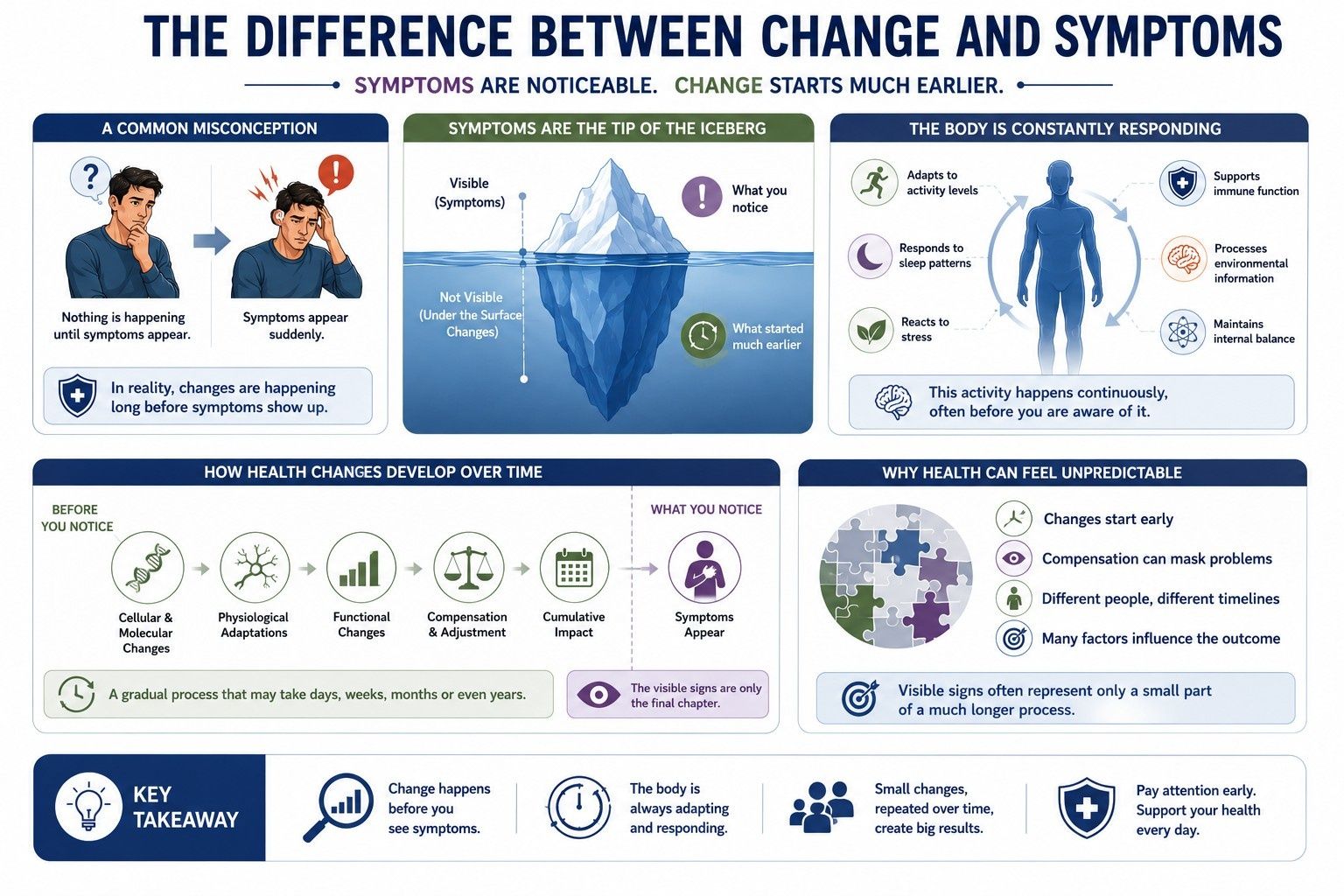
One misconception about health is the belief that nothing is happening until symptoms appear.
From a biological perspective, this is rarely the case.
Symptoms are often the point at which changes become noticeable. They are not necessarily the point at which those changes began.
The body is constantly adjusting to internal and external conditions. It adapts to changes in activity levels. It responds to variations in sleep. It reacts to stress. It processes information from the environment continuously.
Much of this activity occurs before a person becomes consciously aware of it.
This may help explain why health can sometimes feel unpredictable. The visible signs often represent only a small part of a much longer process.
Looking at Health Through a Wider Lens

Health discussions frequently focus on treatment after a problem becomes obvious.
While treatment is important, there is growing interest in understanding the factors that influence health before symptoms develop.
This perspective encourages attention toward everyday habits that are easy to overlook because they seem ordinary.
Sleep, Recovery, Nutrition, Physical activity, Stress management.
Individually, these factors may not appear remarkable. Collectively, however, they help shape the conditions in which the body operates every day.
A Quiet but Important Lesson

Perhaps one of the most overlooked lessons in health science is that the body is always paying attention.
It responds to what we do consistently.
It responds to how we recover.
It responds to the patterns that become part of daily life.
Many of these responses remain invisible for long periods of time. That invisibility can create the impression that nothing is happening.
The reality is often quite different.
The body notices far more than we realize.
And in many cases, it begins adapting to our habits long before the mind becomes aware that anything has changed.