
Why Recovery Is a Biological Process, Not Just Rest
Recovery is one of those concepts that most people believe they understand until they are asked to define it.
For many, recovery simply means taking a break. It means sleeping longer, spending a quiet day at home, or stepping away from work for a few hours. While these experiences can certainly feel restorative, they do not fully explain what recovery means from a biological perspective.
The body does not view recovery as the absence of activity.
In fact, some of the most important processes that support health occur during periods when little appears to be happening at all.
This is one reason recovery deserves far more attention than it usually receives.
When people discuss health, they often focus on actions. Exercise receives attention because it is visible. Productivity is valued because it can be measured. Even stress tends to be recognized when its effects become obvious.
Recovery is different.
Most of the processes that define recovery take place quietly and largely unnoticed. Yet these processes influence how effectively the body adapts, repairs itself, and responds to future challenges.
The Challenge Is Not the Whole Story
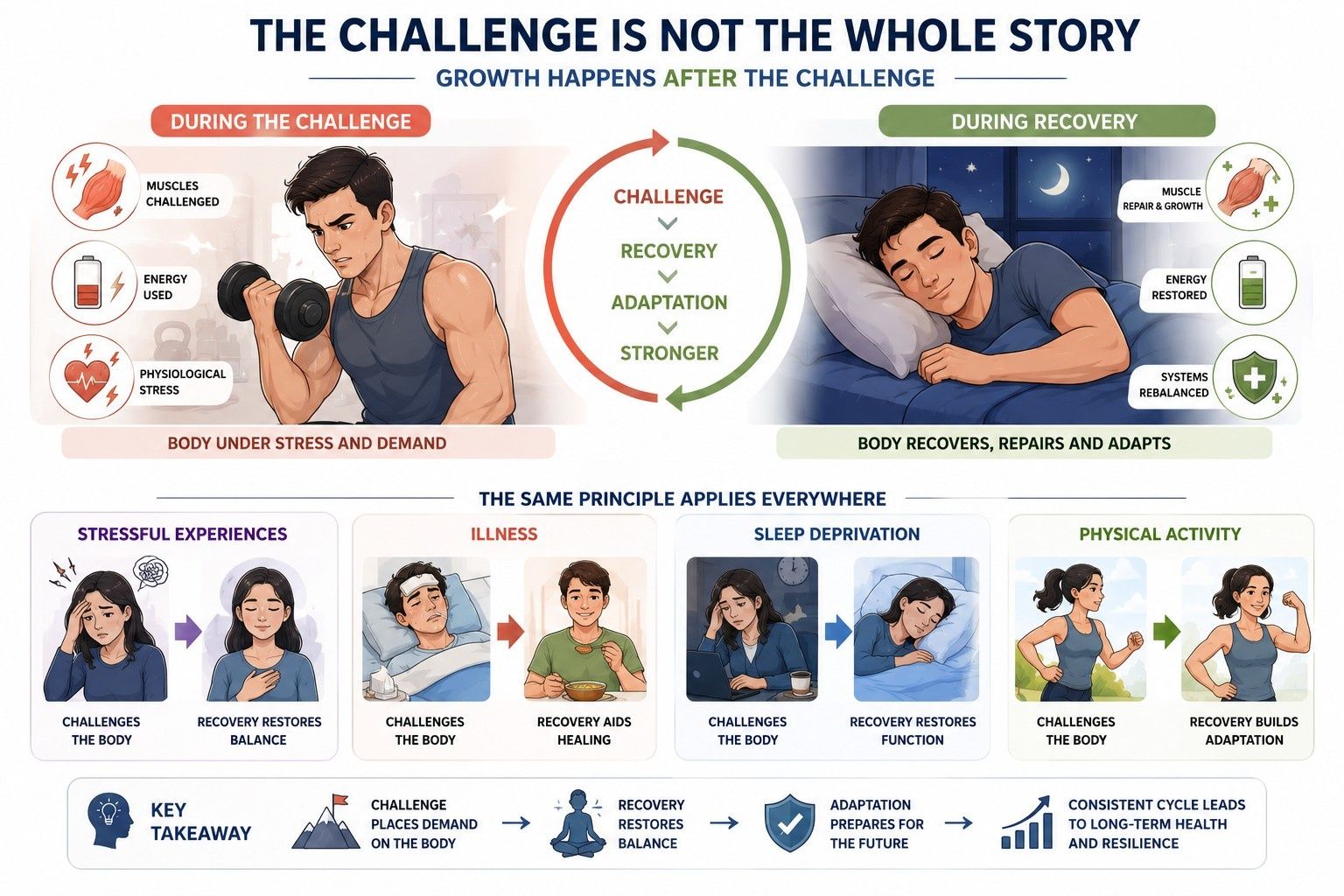
One of the more interesting observations in health science is that improvement rarely occurs during the challenge itself.
Consider physical activity.
When someone exercises, the body is exposed to a demand. Muscles are challenged. Energy stores are used. Various physiological systems are placed under stress.
It is tempting to assume that this is the moment when progress occurs.
The reality is more complicated. Much of the adaptation associated with exercise takes place afterward. The body responds to the challenge, adjusts to it, and prepares itself for future demands.
The same principle extends beyond physical activity.
Stressful experiences challenge the body.
Illness challenges the body.
Sleep deprivation challenges the body.
In each case, recovery is the period during which the body attempts to restore balance and adapt to what has occurred.
Why Rest and Recovery Are Not Identical
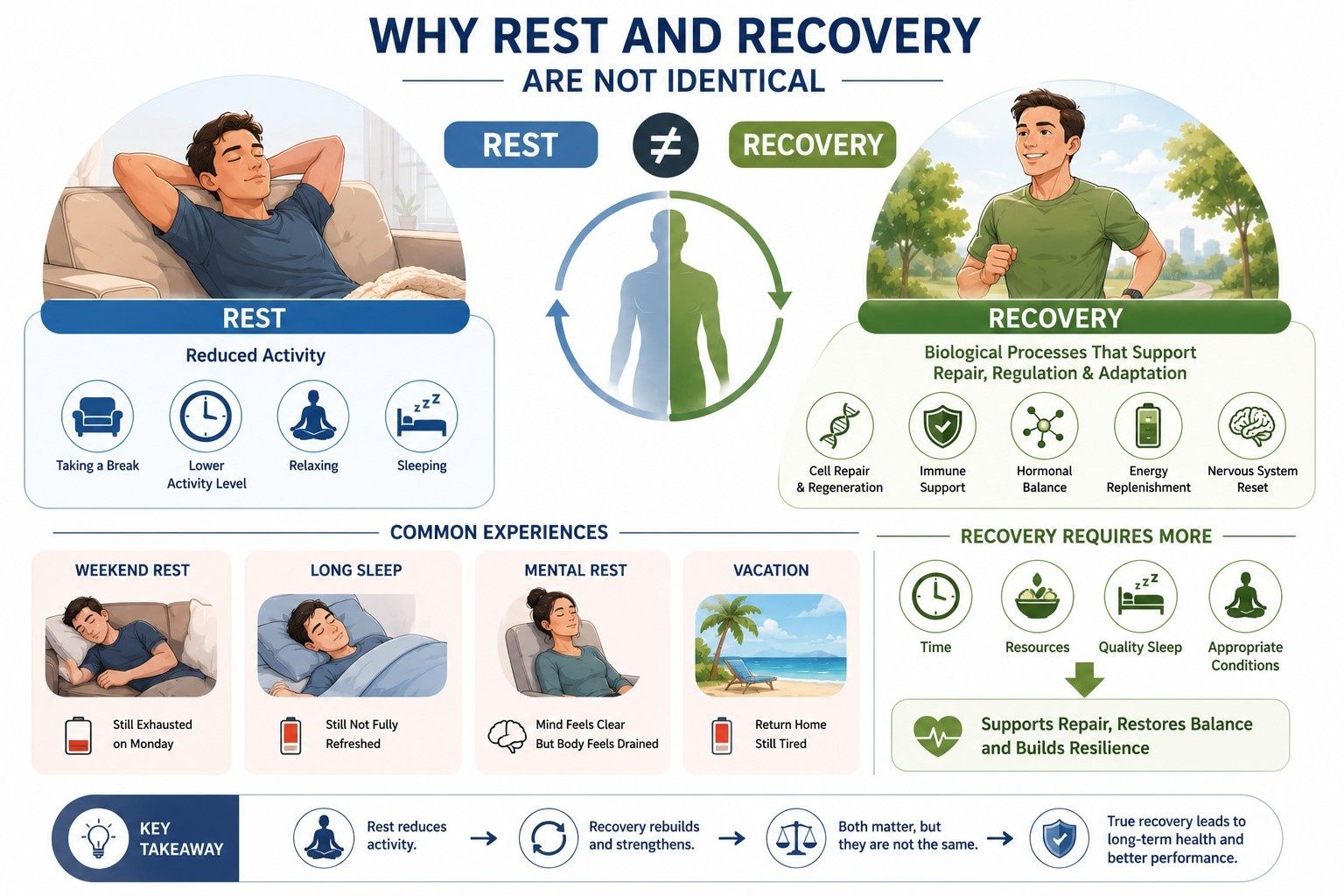
The terms rest and recovery are often used interchangeably, but they describe different ideas.
Rest refers to reduced activity.
Recovery refers to the biological processes that support repair, regulation, and adaptation.
This distinction may help explain a common experience.
Many people have had weekends when they rested extensively yet still felt exhausted when the new week began.
Others have slept for long periods without feeling fully refreshed.
These experiences suggest that recovery involves more than simply stepping away from activity.
The body requires time, resources, and appropriate conditions to carry out the processes that support normal function.
Sleep Is Only Part of the Picture
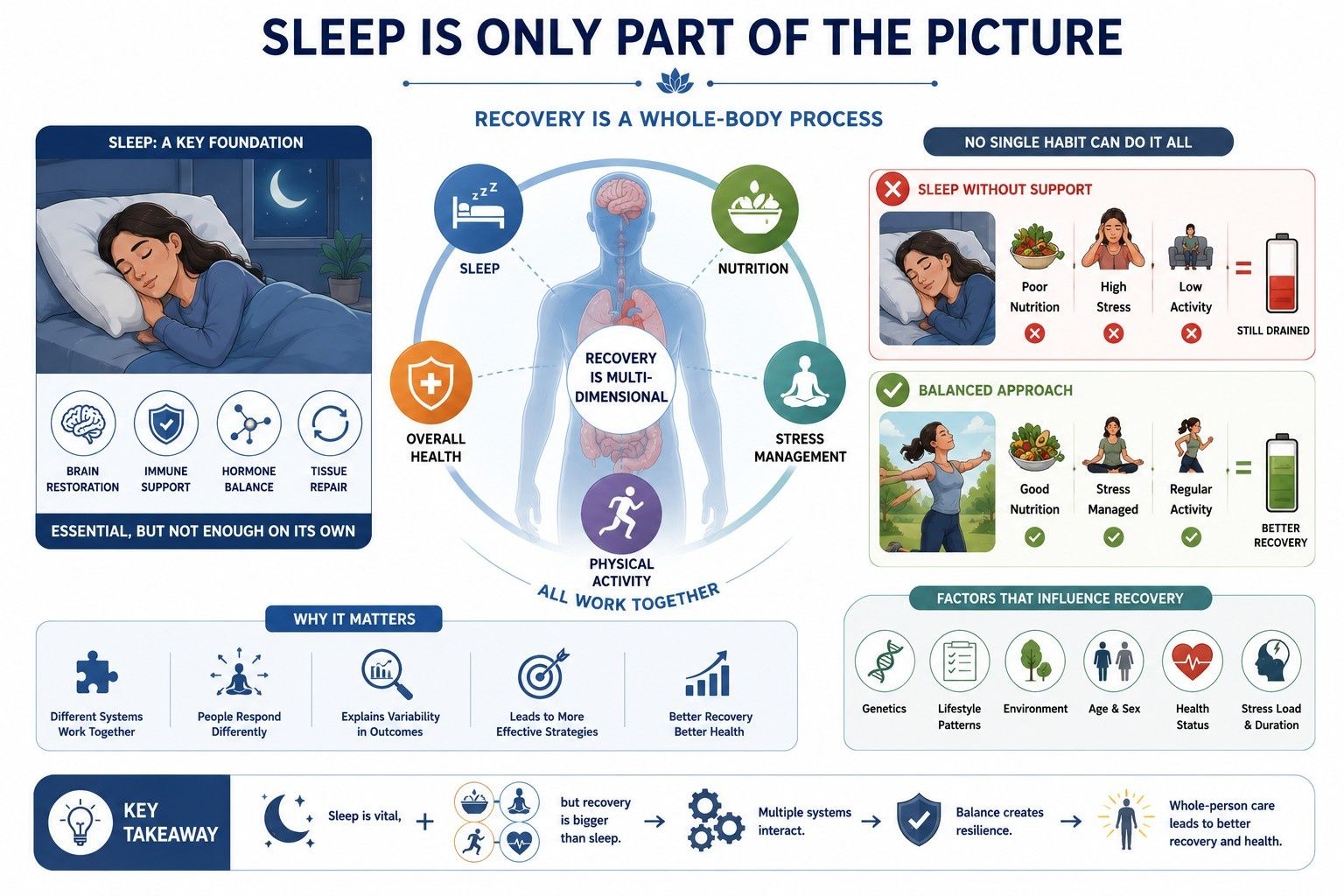
Sleep is often viewed as the foundation of recovery, and for good reason.
Few biological functions are as closely connected to restoration as sleep.
Yet recovery cannot be reduced to sleep alone.
The body also depends on adequate nutrition, effective stress management, physical activity, and overall health.
A person may obtain sufficient sleep while neglecting other factors that influence recovery.
Likewise, excellent nutrition cannot completely compensate for chronic sleep deprivation.
Recovery reflects the interaction of multiple systems rather than the influence of a single habit. This broader perspective is becoming increasingly important as researchers attempt to understand why people respond differently to similar challenges.
The Cost of Inadequate Recovery
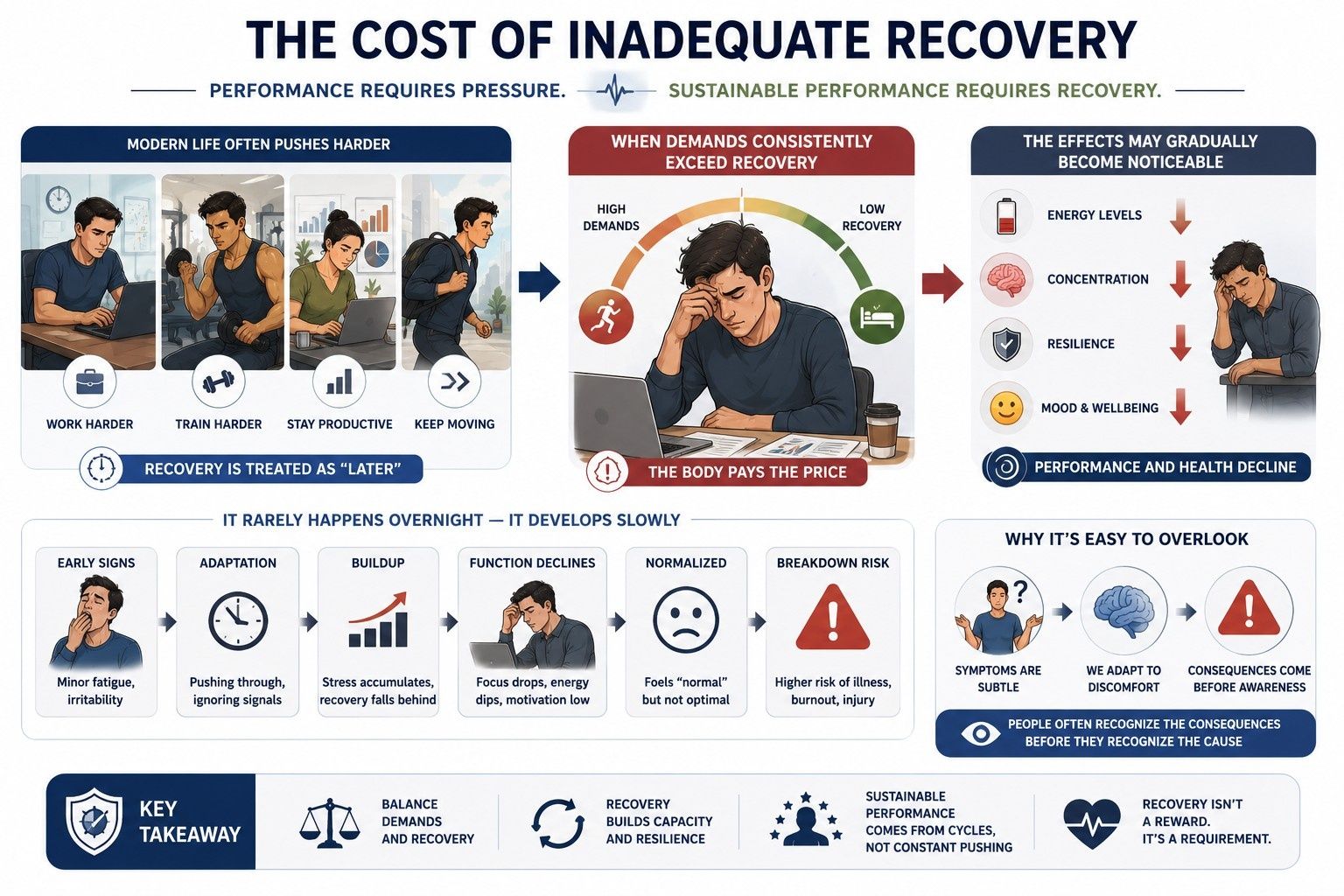
Modern life often encourages people to focus on output.
- Work harder.
- Train harder.
- Stay productive.
- Keep moving.
Recovery is frequently treated as something that can be addressed later.
Human biology does not always cooperate with that approach.
When demands consistently exceed recovery, the effects may gradually become noticeable. Energy levels may decline. Concentration may become more difficult. Resilience may decrease.
These changes rarely appear overnight.
More often, they develop slowly enough that people begin to view them as normal.
That may be one of the reasons inadequate recovery is so easy to overlook. People often recognize the consequences before they recognize the underlying cause.
Looking at Health Through the Lens of Recovery
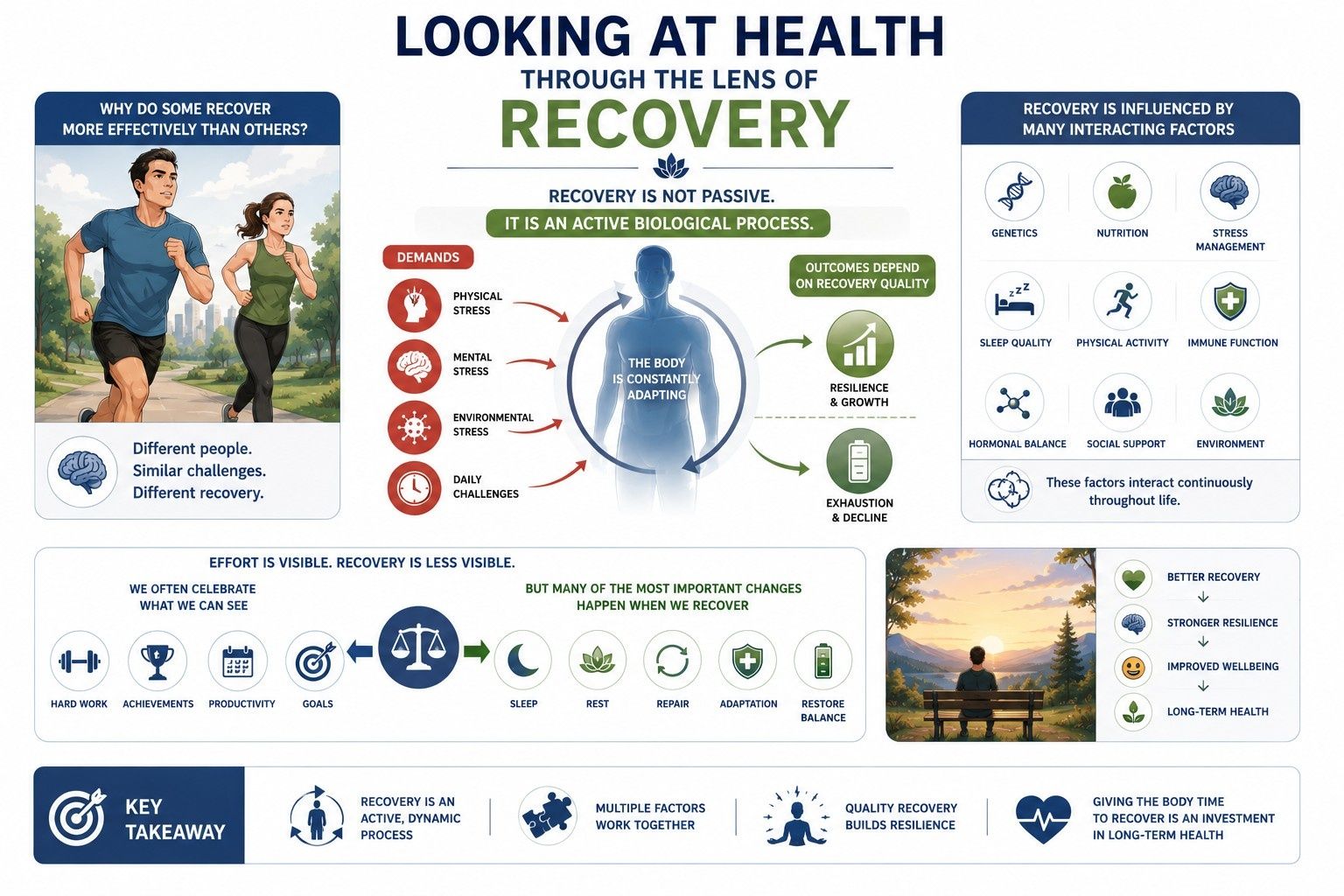
One question continues to appear across many areas of health research.
Why do some individuals seem to recover more effectively than others despite facing similar challenges?
There is no single answer.Recovery is influenced by numerous factors that interact continuously throughout life.
What remains clear, however, is that recovery is not a passive state.
It is an active biological process.
The body is constantly responding to the demands placed upon it. Whether those demands ultimately contribute to resilience or exhaustion depends, in part, on the quality of recovery that follows. Perhaps this is why recovery deserves a larger place in conversations about health.
We often celebrate effort because effort is visible.Recovery is less visible.
Yet many of the changes that support long term health occur during the periods when the body is given an opportunity to repair, adapt, and restore balance.