Why Healthy Skin Begins Beneath the Surface
If there is one misconception that continues to dominate discussions about skin health, it is the belief that healthy skin can be built primarily through products.
The popularity of this idea is understandable. Skin is visible. When something changes, we naturally look for a visible solution. A different cleanser, a new serum, a more expensive moisturizer. The assumption is simple: if the problem appears on the surface, the solution must also belong there.
The biology, however, tells a more complicated story.
Over the years, what I have found most interesting about skin health research is how often the conversation eventually moves away from the skin itself. Studies that begin with questions about skin aging, barrier function, or resilience frequently lead researchers toward subjects such as sleep, stress, nutrition, inflammation, and overall health.
This does not mean skincare products are unimportant. It simply means that the skin rarely functions as an isolated organ.
The Skin Is Often a Reflection, Not Just a Surface
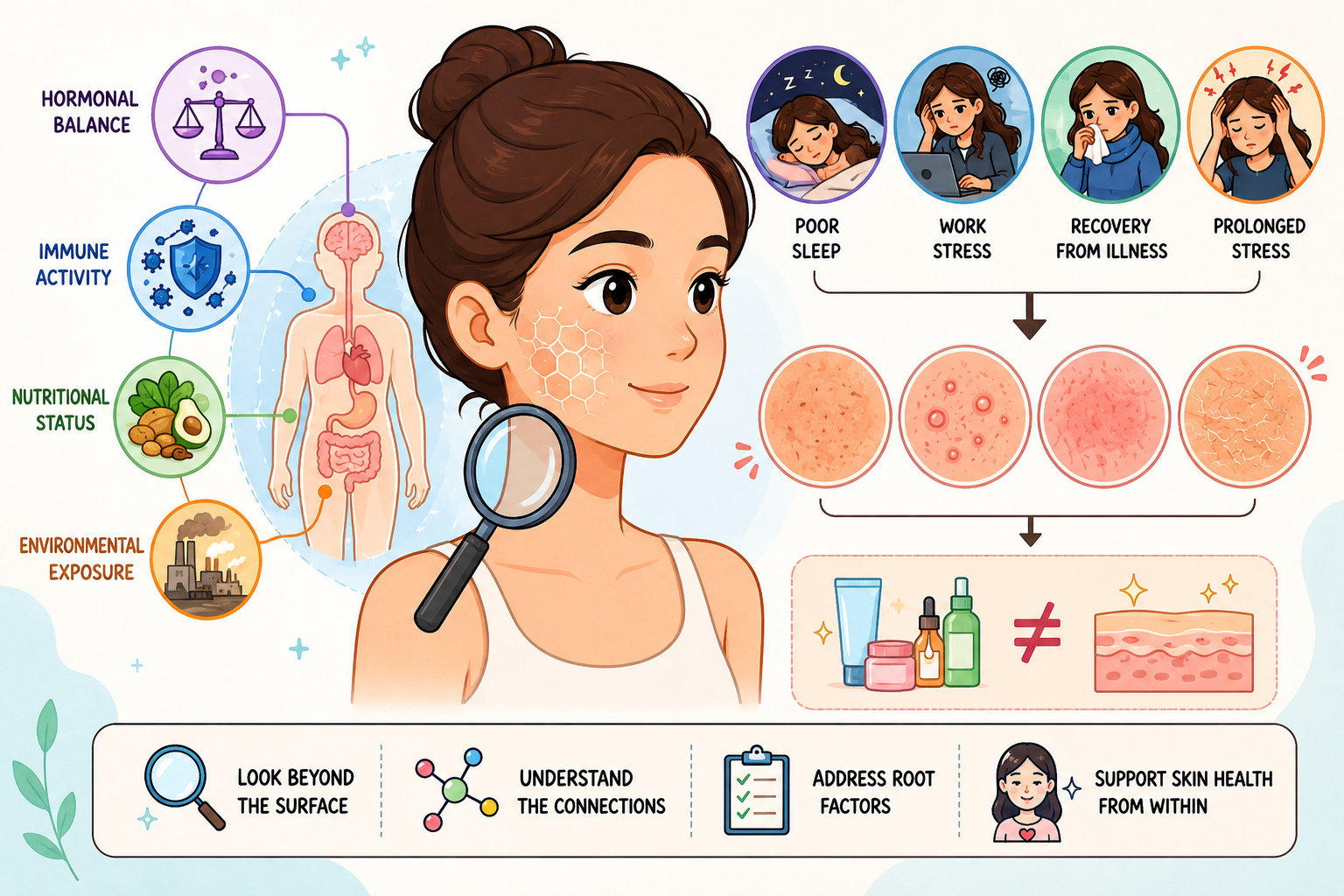
One reason skin health is so fascinating is that the skin sits at the intersection of multiple biological systems.
It responds to hormones. It responds to immune activity. It responds to nutritional status and environmental exposure. In many ways, the skin acts as a visible record of processes occurring elsewhere in the body.
Most people have experienced this without necessarily thinking about it. A period of poor sleep, a demanding month at work, recovery from an illness, or prolonged stress can sometimes be followed by noticeable changes in the skin.
The skincare routine may remain unchanged, yet the skin behaves differently.
That observation alone suggests that something more than topical care is involved.
Why Sleep Deserves More Attention
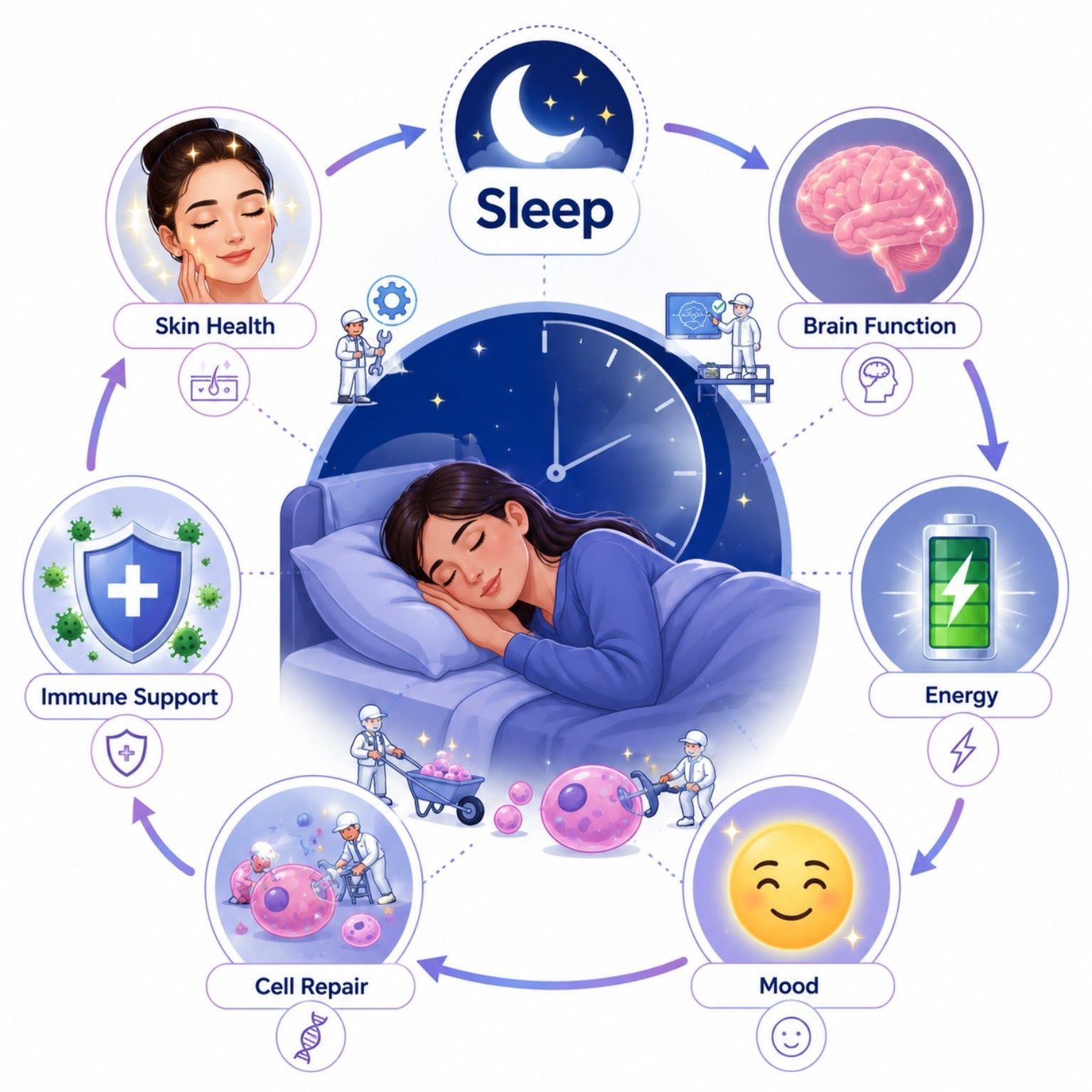
Among the many factors that influence health, sleep remains surprisingly undervalued.
In conversations about skin, people often focus on ingredients and products while giving relatively little attention to sleep quality. Yet sleep is one of the few periods during which the body can prioritize recovery and maintenance.
What makes sleep particularly important is its broad influence. It affects processes throughout the body rather than targeting a single organ or function.
This may explain why inadequate sleep rarely produces a single symptom. Instead, its effects often appear across multiple aspects of health, including energy, mood, recovery, and, in many cases, skin appearance.
The relationship is not especially mysterious. Healthy biological systems tend to function better when recovery is adequate.
Nutrition Is About Patterns, Not Perfection
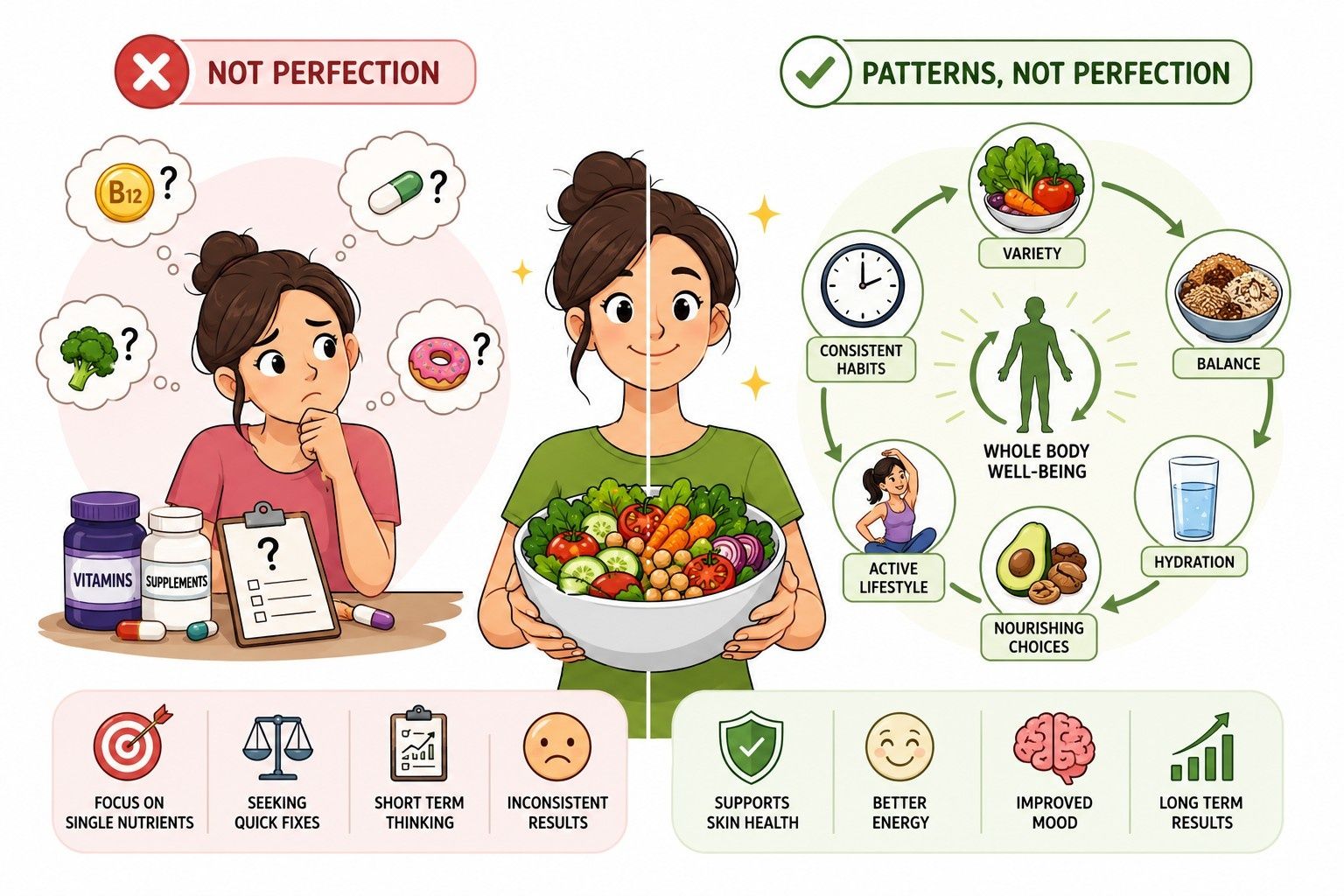
Nutrition discussions often become trapped in questions about individual nutrients.
Which vitamin is best for the skin? Which supplement should be taken? Which food should be avoided?
While these questions are understandable, they can sometimes distract from the larger picture.
The body does not operate one nutrient at a time. It functions as an integrated system. For this reason, overall dietary patterns are often more meaningful than any single food or supplement.
When researchers examine long term health outcomes, they frequently find that consistent habits matter more than isolated interventions. Skin health is unlikely to be an exception.
The Stress Connection
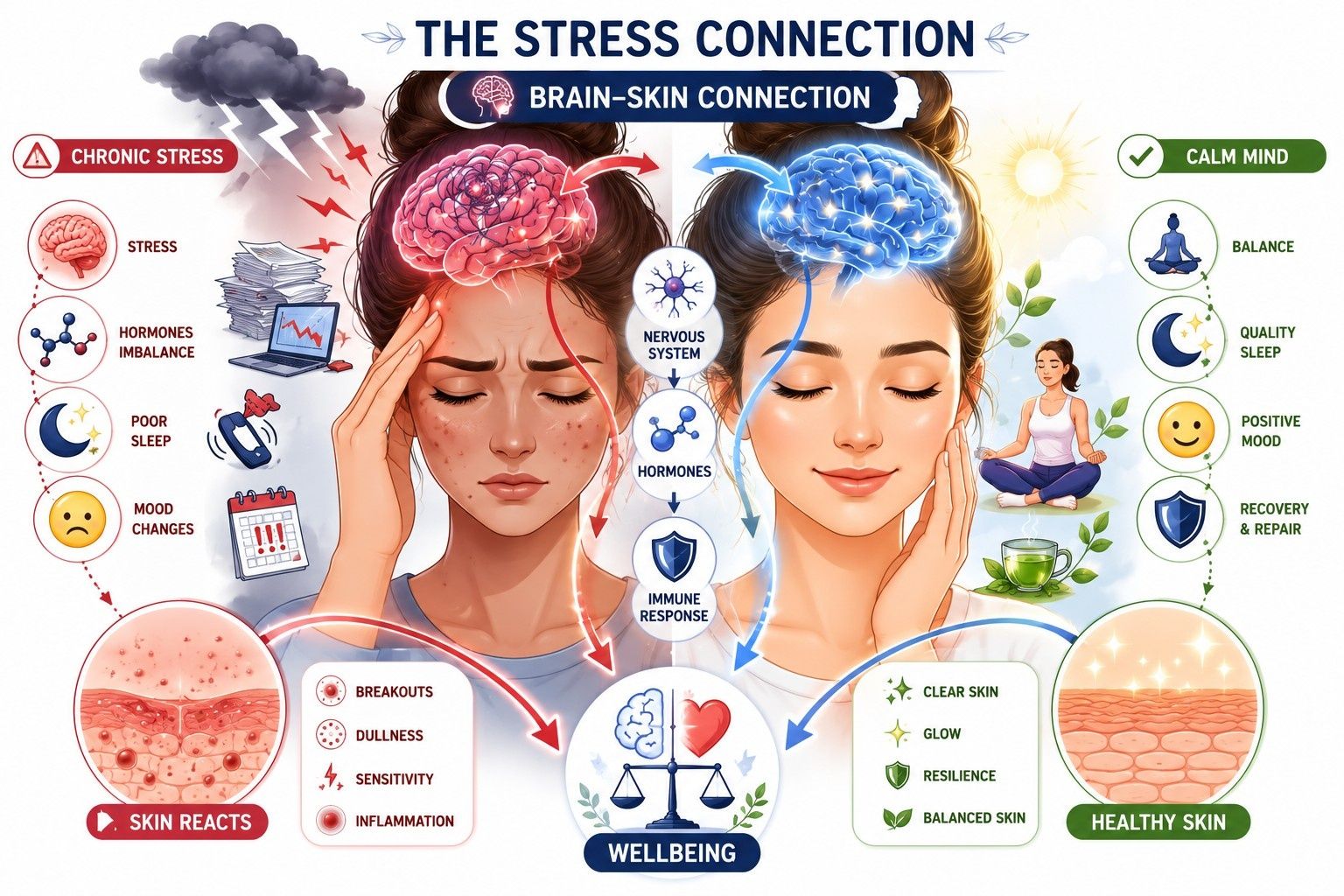
Perhaps no area of skin research feels more familiar to people than the relationship between stress and skin health.
Many individuals can recall a period when life became unusually demanding and their skin seemed to change alongside it.
This observation has attracted considerable scientific interest because it highlights how closely connected the body’s systems really are. The traditional tendency to separate mental wellbeing from physical health becomes difficult to maintain when examining the biological effects of chronic stress.https://drwebmedcare.online/inflammation-and-skin-health-the-connection-most-people-overlook/
The skin provides one of the most visible examples of this connection.
Looking Beyond Quick Fixes
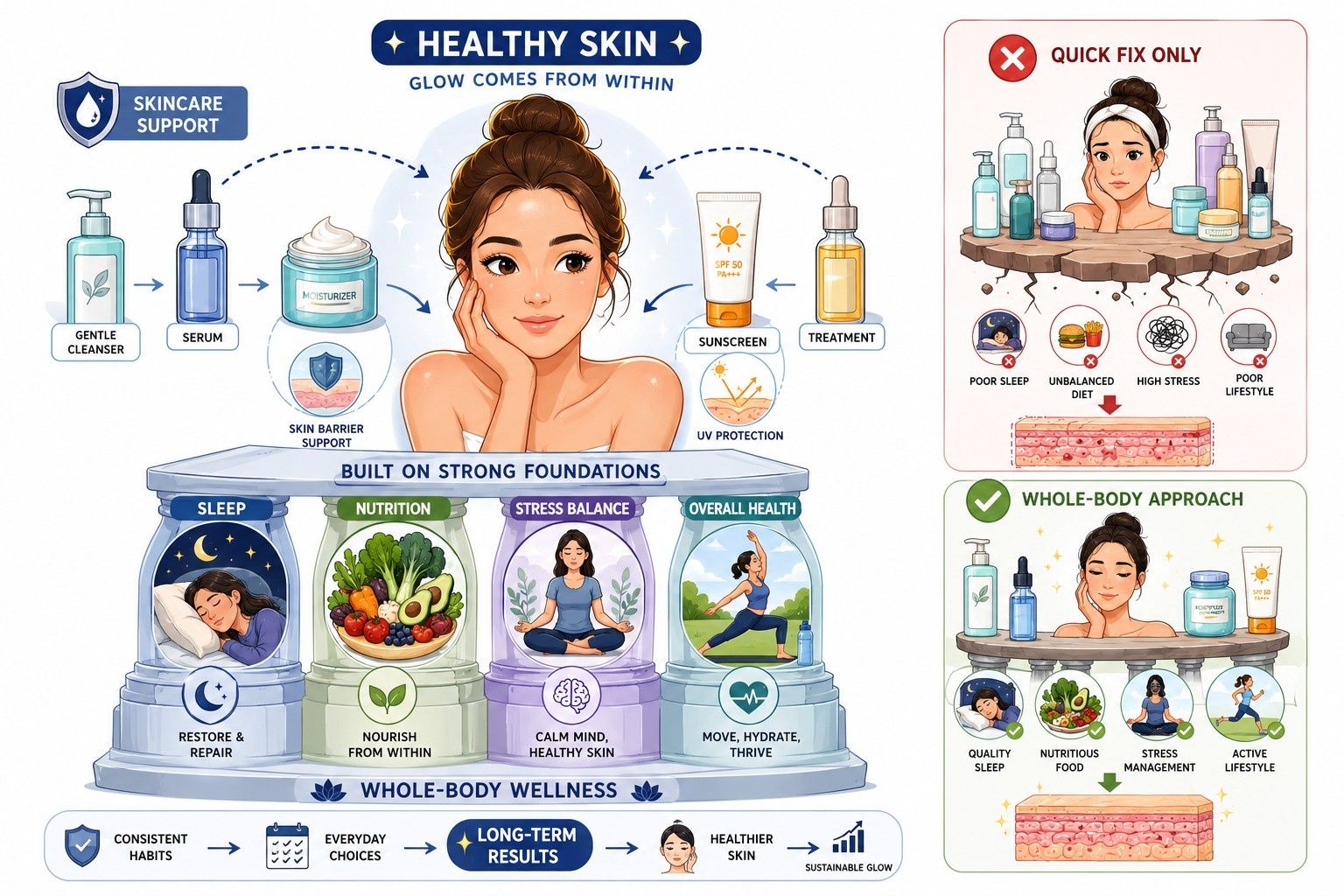
Modern skincare has achieved remarkable advances, and many products can provide meaningful benefits.
The problem arises when products are expected to compensate for factors that originate elsewhere.
A moisturizer can support the skin barrier. Sunscreen can help protect against ultraviolet damage. These interventions matter.
At the same time, no product can fully replace the benefits of adequate sleep, balanced nutrition, effective stress management, and overall health.
This is not a limitation of skincare. It is simply a reflection of how human biology works.
A Different Way to Think About Skin Health
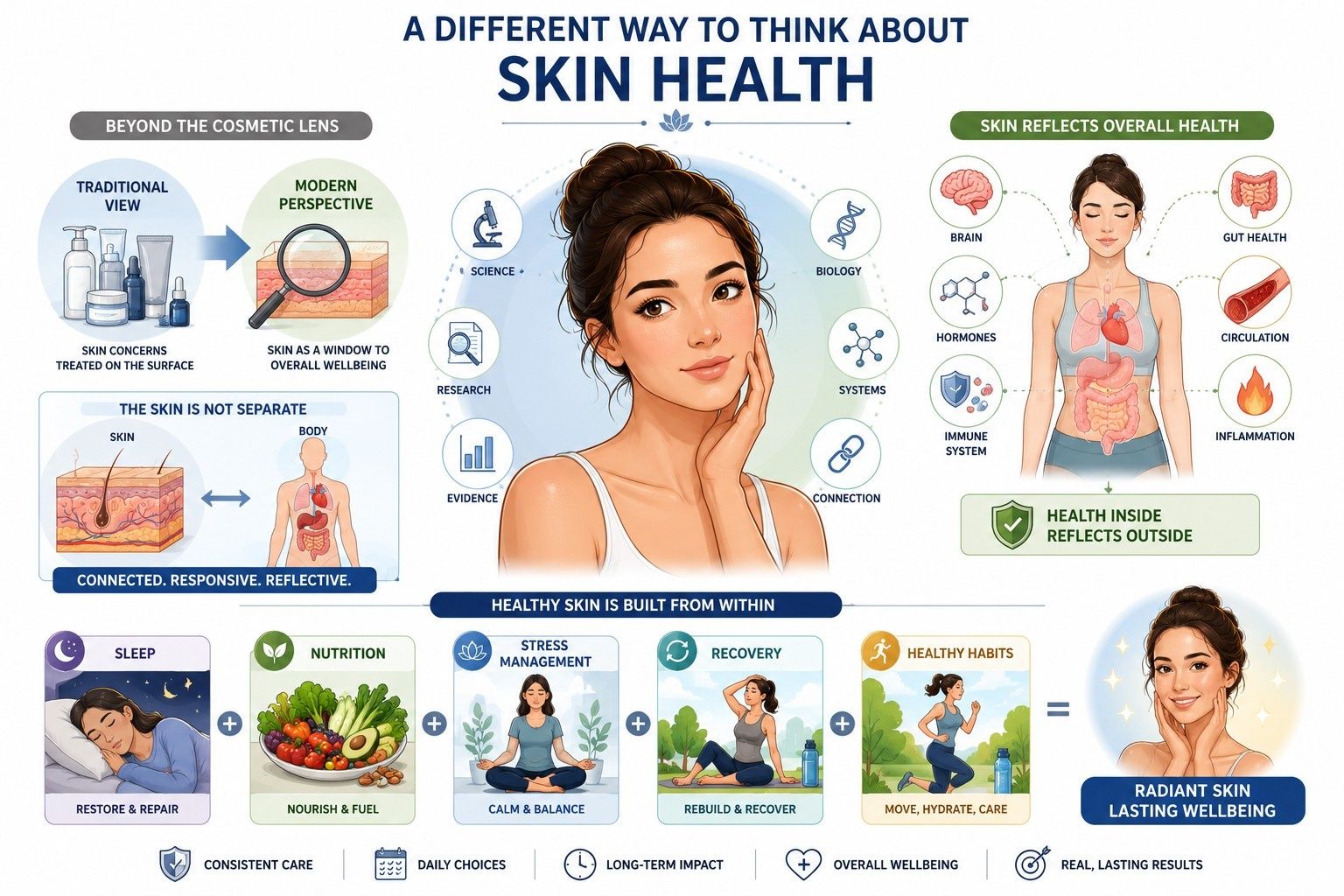 One of the most valuable shifts occurring in skin science today is a move away from viewing skin concerns exclusively through a cosmetic lens.
Increasingly, researchers are recognizing that the condition of the skin may offer insight into broader aspects of health and wellbeing.
That perspective does not make skincare less important.
It simply places skincare within a larger framework.
The skin is not separate from the body. It responds to the same biological forces that influence overall health. Understanding this connection may be one of the most important steps toward a more realistic and more effective view of skin health.
Healthy skin is not built by products alone.
More often, it reflects the cumulative effects of how we sleep, eat, recover, adapt to stress, and care for our health over time.