
What Does the Immune System Remember?
When most people hear the word memory, they think about the brain.
They think about remembering a familiar face, recalling a conversation, or finding their way back to a place they have visited before.
Memory feels deeply personal.
It is something we naturally associate with human experience.
What is less widely appreciated is that the immune system also possesses a remarkable ability to remember.
Not in the way the brain remembers, of course.
The immune system does not remember names, birthdays, or life events.
Yet it has the ability to learn from previous encounters and retain information that may influence future responses.
From an immunology perspective, this is one of the most fascinating characteristics of the human immune system.
The Immune System Is Not Starting From Scratch Every Time
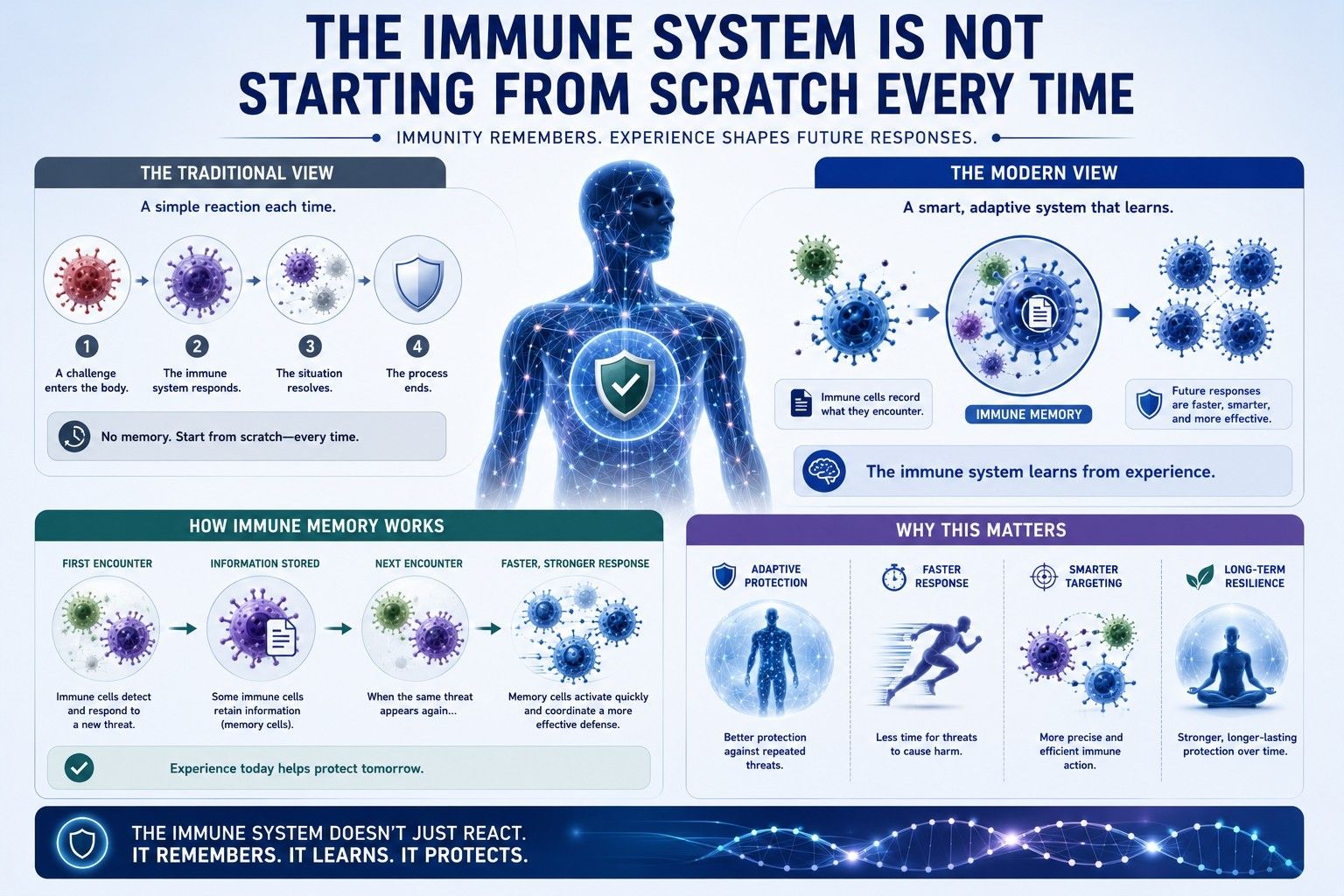
It is easy to imagine immunity as a system that reacts only when a challenge appears.
Something enters the body.
The immune system responds.
The situation resolves.
The process ends.
Modern immunology paints a far more interesting picture.
Certain immune cells can retain information from previous encounters. In a biological sense, they carry a record of past experiences.
This means that future responses may be influenced by what the immune system has encountered before.
The immune system is not simply reacting.
It is learning.
Why Memory Matters
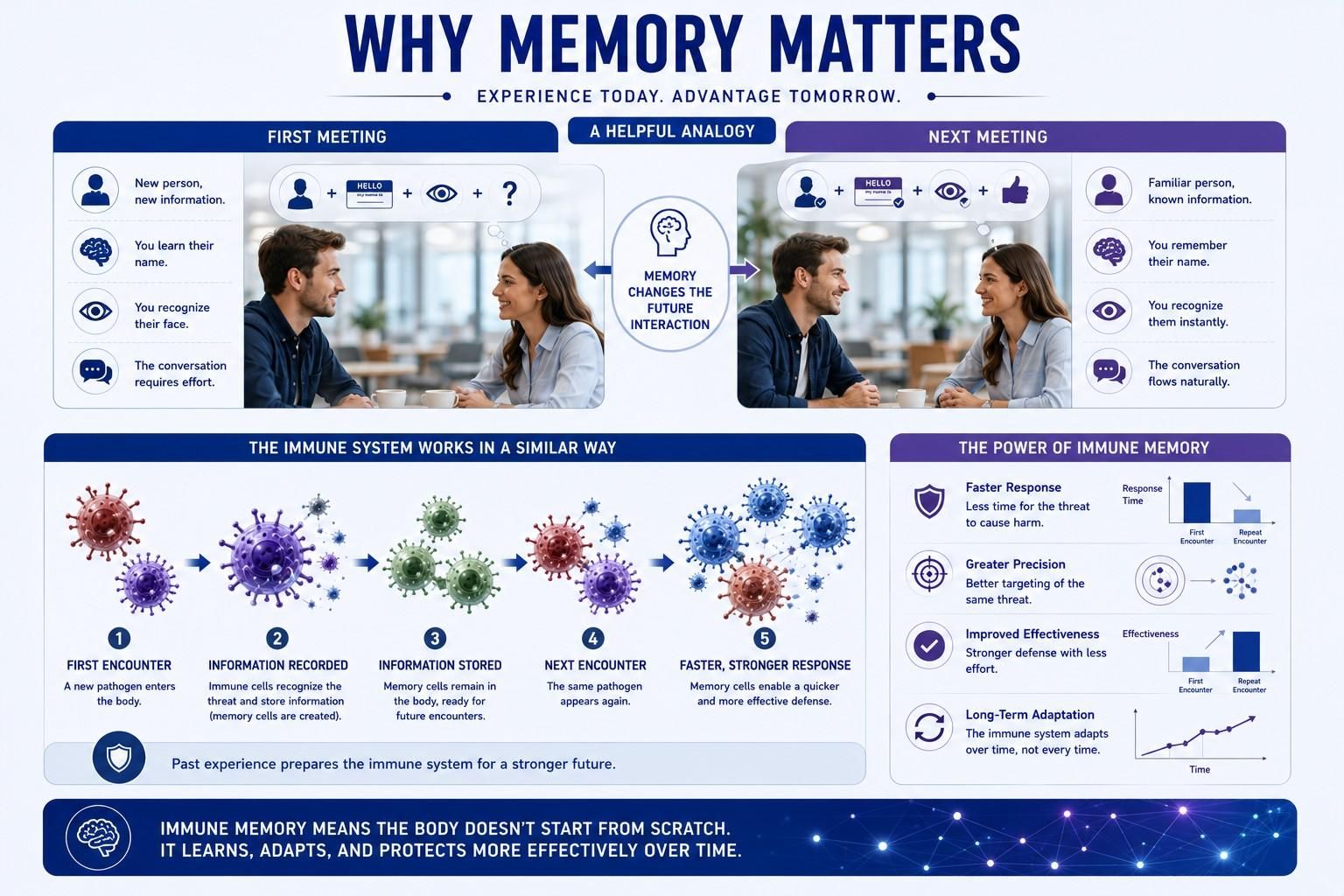
Imagine meeting someone for the first time.
The first conversation requires effort. You learn their name, recognize their face, and gradually become familiar with them.
The next meeting feels different because the interaction is no longer entirely new.
The immune system follows a similar principle.
Previous encounters can influence how immune cells respond in the future.
This ability to retain information allows the immune system to adapt over time rather than treating every encounter as though it has never happened before.
A Dynamic and Adaptable System
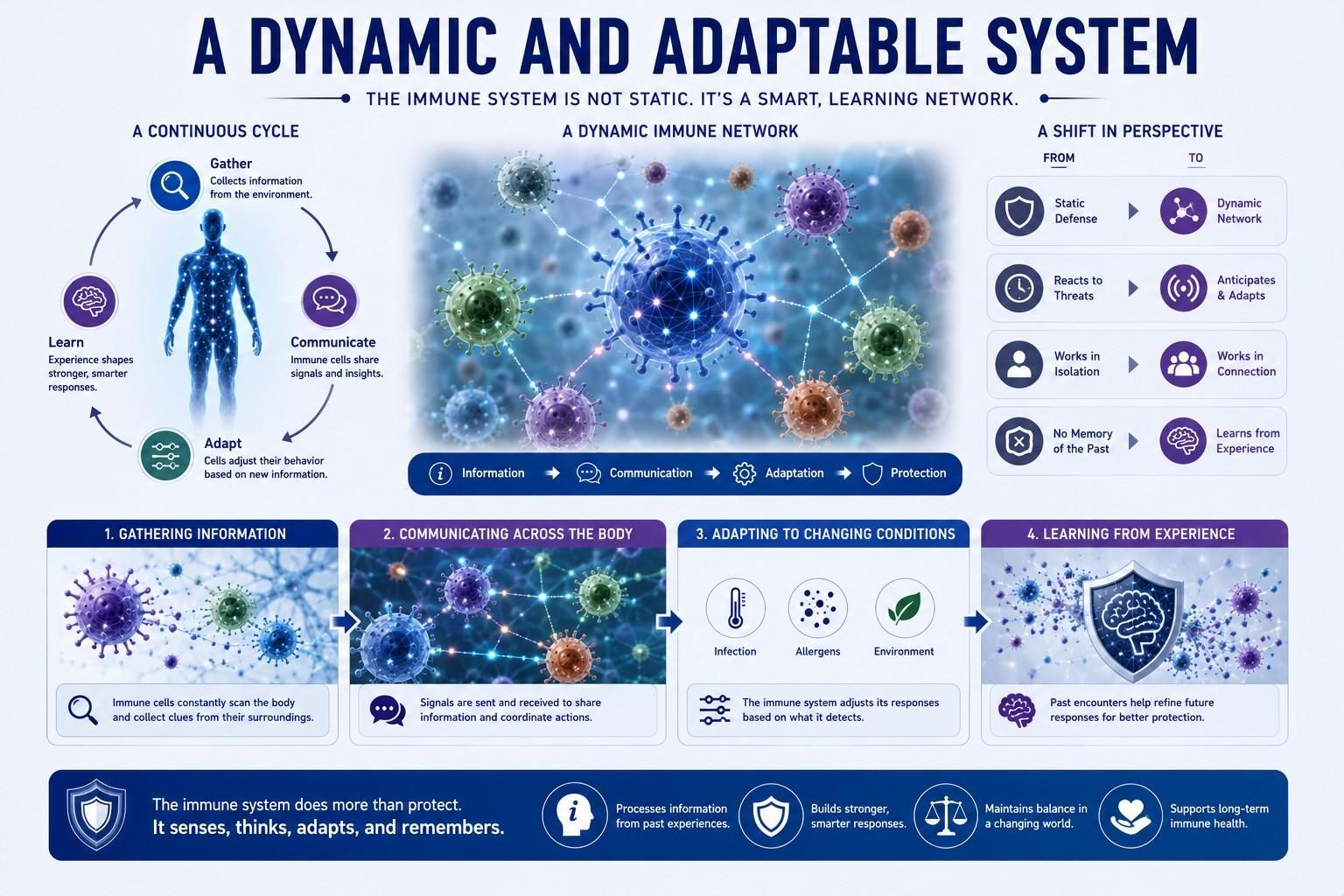
One of the most interesting developments in modern immunology is the recognition that immunity is not a static process.
The immune system is constantly gathering information from its environment.
It communicates.
It adapts.
It learns.
Researchers increasingly view immunity as a dynamic biological network that continuously responds to changing conditions.
This perspective has transformed how scientists think about immune health.
The immune system is not simply protecting the body.
It is also processing information from previous experiences.
Looking Beyond Protection Alone
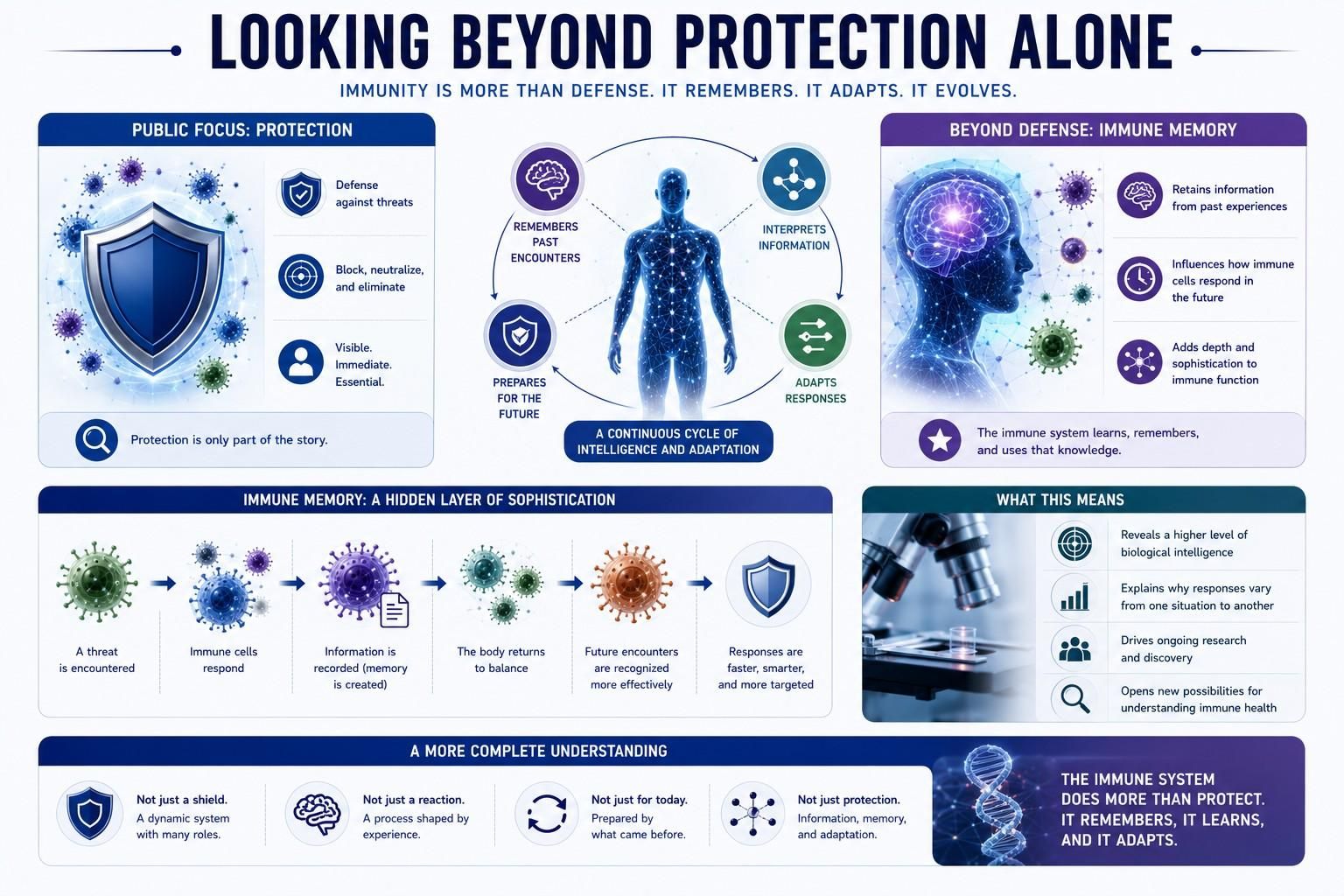
Public conversations about immunity often focus on defense.
That focus is understandable.
Protection is one of the immune system’s most visible functions.
Immune memory reminds us that something else is happening as well.
The immune system is capable of retaining information in ways that influence future responses.
This ability highlights a level of biological sophistication that continues to fascinate researchers around the world.
A Different Way to Think About Immunity
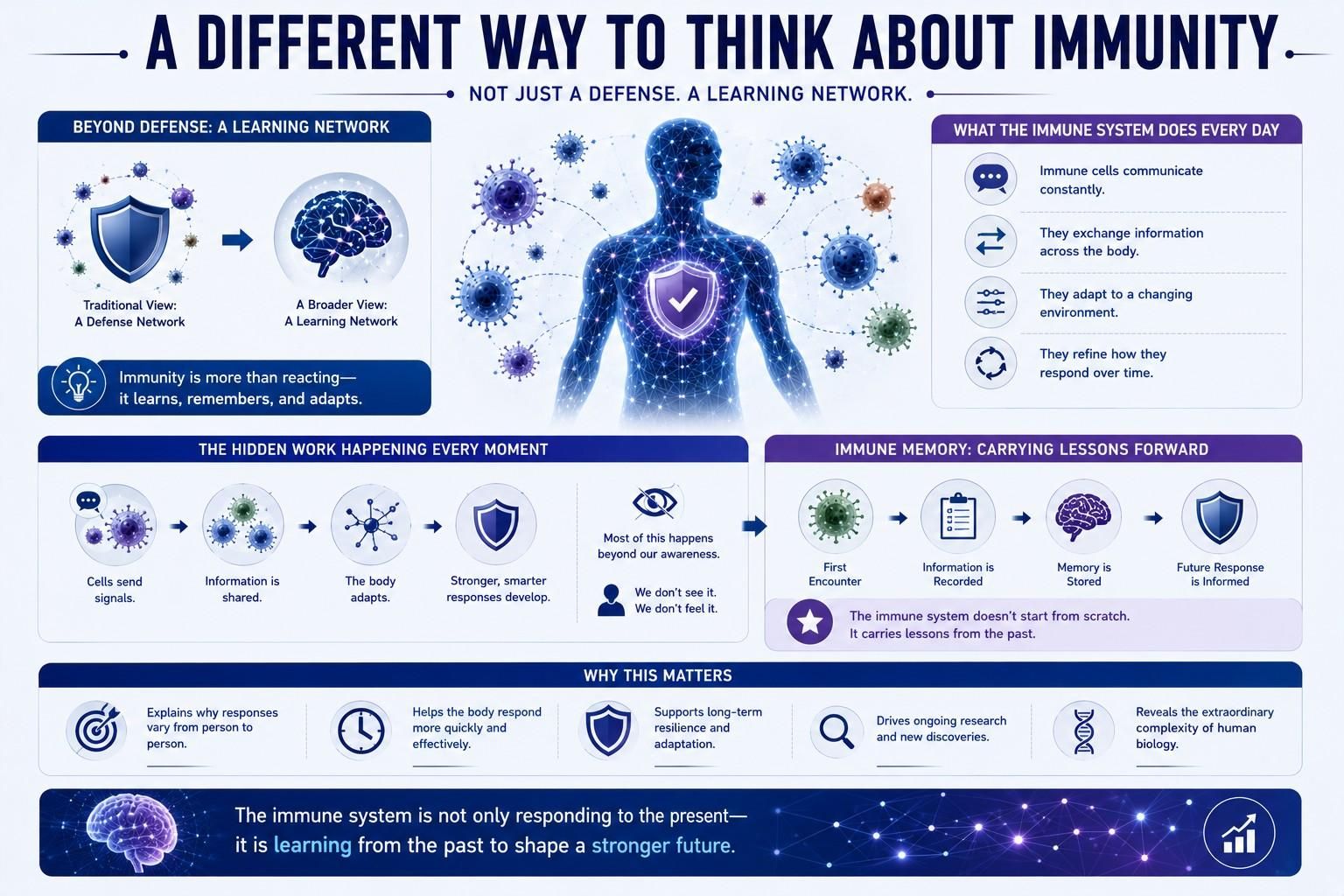 Perhaps the immune system is best understood not simply as a defense network, but as a learning network.
Every day, immune cells communicate with one another, exchange information, and adapt to the environment they encounter.
Most of this activity takes place beyond our awareness.
We never notice it.
Yet these processes help shape how the immune system responds over time.
The more researchers learn about immune memory, the more remarkable the immune system appears.
It is not only responding to the present.
In many ways, it is carrying lessons from the past.
And that ability to remember may be one of the most extraordinary features of human biology.